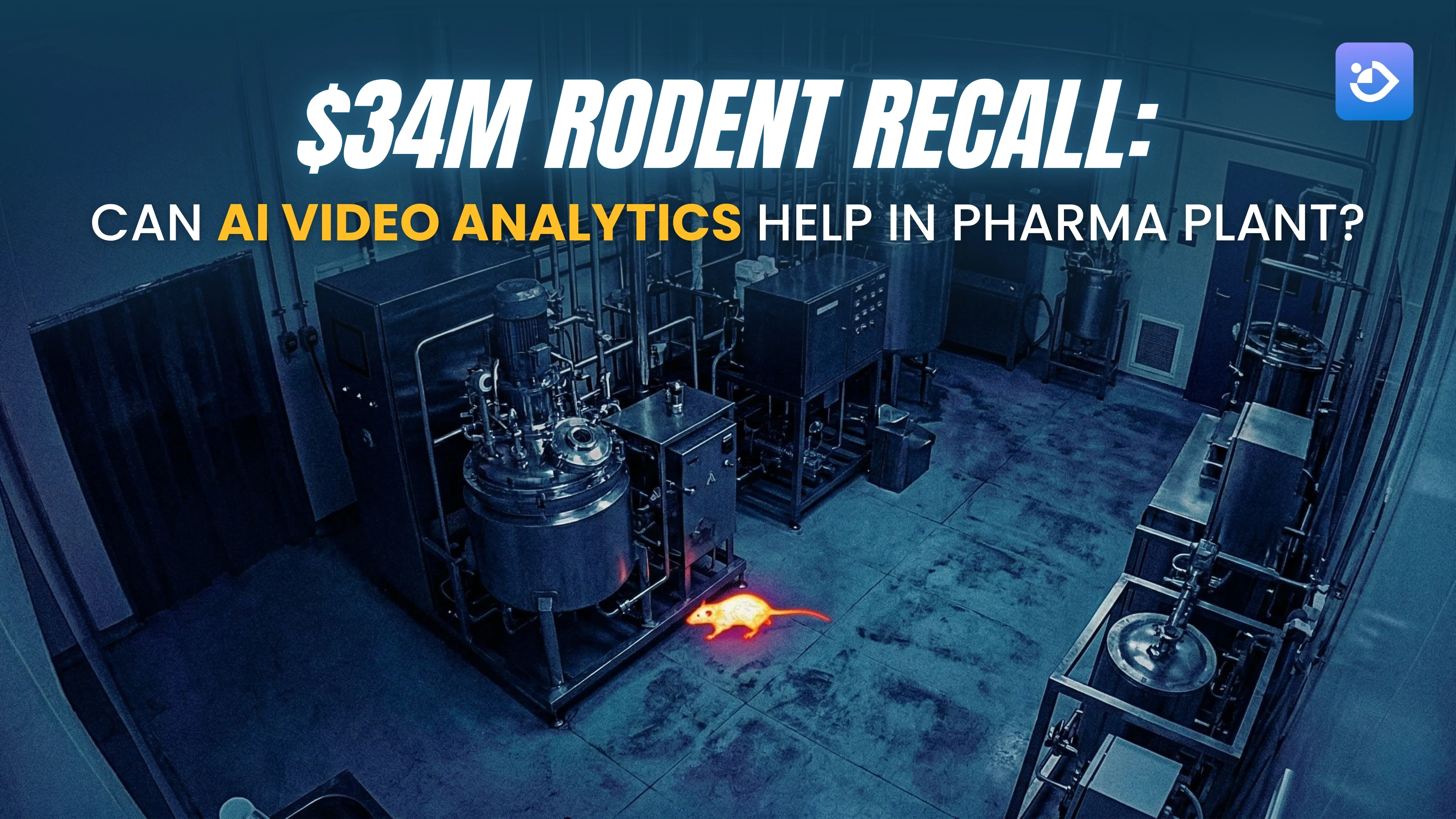
AI Video Analytics in Pharma: Preventing Contamination Risks in Pharmaceutical Plants
Let’s start with an uncomfortable question.
What is the real cost of a rodent inside a pharmaceutical plant?
If you ask someone outside the industry, they’ll probably shrug and say: “Call pest control.” But anyone running a pharma facility knows the importance of rodent infestation in a pharma manufacturing facility.
Inside a pharmaceutical manufacturing environment, a rodent is not just a pest. It’s a contamination event waiting to happen. It’s a regulatory violation.
Sometimes, it’s the first domino that leads to a multi-million dollar recall.
That’s why conversations around using AI video analytics in pharma have started shifting. What used to be treated as a facility maintenance issue is now being treated as a real-time compliance risk.
Because in pharma, one rodent can trigger consequences that ripple across the entire organization.
Let’s break that down.
The Adulteration Rule
Under FDA law, a drug becomes “adulterated” if it is manufactured or stored under insanitary conditions.
One pest sighting can put entire batches under scrutiny.
The Reputation Damage
A public recall doesn’t just affect inventory.
It can wipe out decades of brand trust overnight.
The Financial Impact
Sometimes the root cause is trivial.
A ₹5,000 crack in a wall.
A loading dock door left open too long.
But that tiny crack can easily translate into ₹20 Crore worth of destroyed inventory.
This is exactly why more facilities are moving toward using the power of AI video analytics in pharma environments.
Instead of discovering pest activity weeks later during manual inspections, intelligent systems detect the moment something moves where it shouldn’t.
The $34 Million Family Dollar Disaster
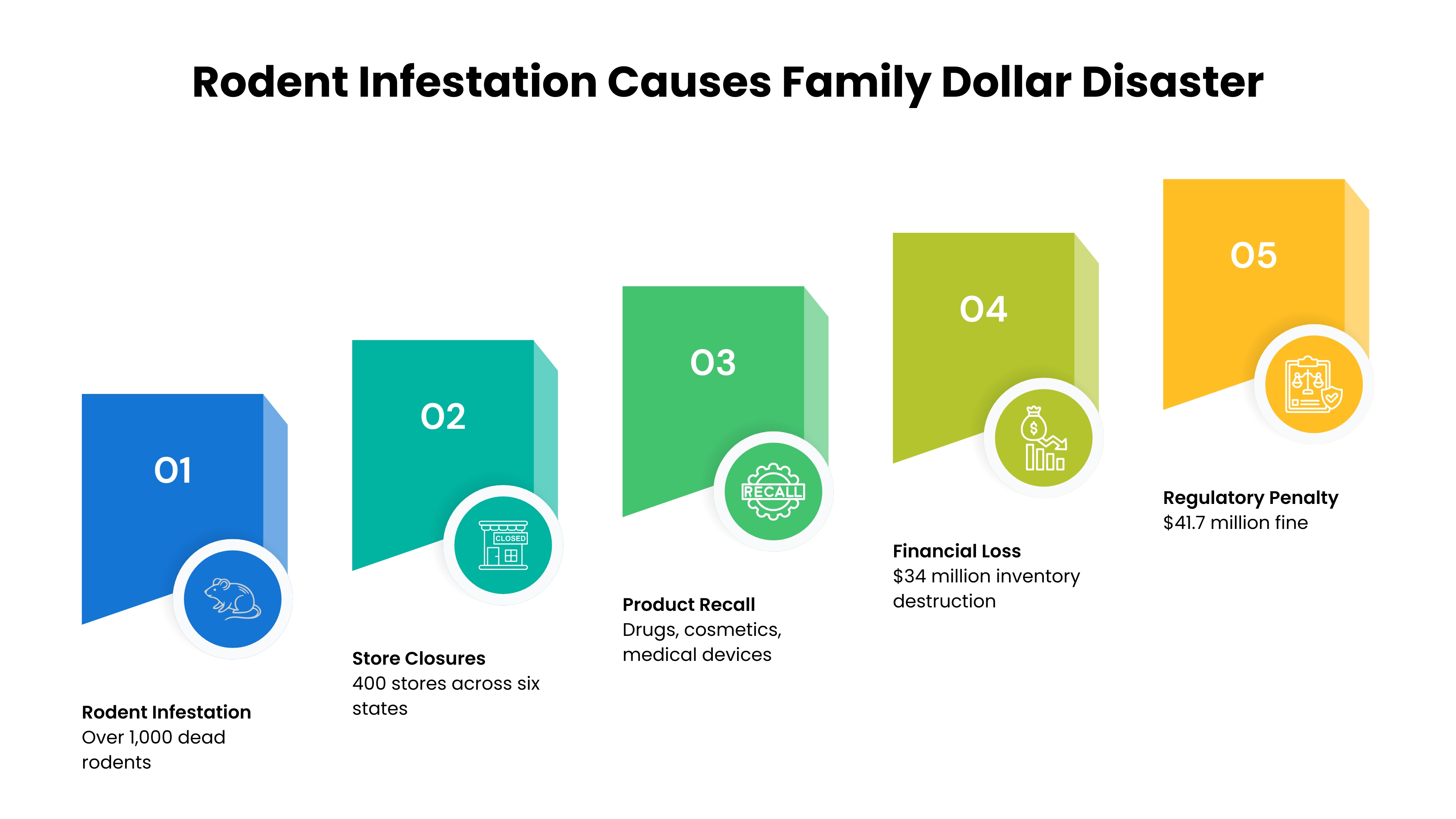
If you want to see how quickly things escalate, look at the infamous Family Dollar warehouse case in Arkansas.
It began with something simple. A customer complained about seeing large rodents.
When regulators investigated the facility, they uncovered something shocking.
Over 1,000 dead rodents inside the warehouse.
The consequences were massive.
The Scale
More than 400 stores across six states were forced to close.
The Recall
Products across multiple categories had to be pulled from shelves, including drugs, cosmetics, and medical devices.
The Financial Damage
The company took an immediate $34 million loss due to inventory destruction.
Then came a devastating $41.7 million regulatory penalty.
Now imagine the same contamination risk inside a pharmaceutical manufacturing facility.
The consequences wouldn’t just be financial. They could be existential.
That’s why AI video analytics systems in pharma are gaining attention across the industry. Because the goal is simple: catch the problem before regulators do.
The Sun Pharma Warning Letter
India has seen similar incidents.
One of the most cited cases involved Sun Pharmaceutical Industries’ facility in Karkhadi, Gujarat. During an FDA inspection, regulators found severe sanitation issues.
The facility was not maintained in a clean and sanitary condition and was not free of infestation by rodents, birds, and insects.
The inspection revealed multiple warning signs:
- Strong smell of urine inside the QC lab
- Garbage accumulation near production zones
- Structural maintenance failures
To regulators, these findings weren’t isolated problems. They indicated a systemic breakdown in facility control.
Today, companies trying to avoid similar outcomes are considering deploying AI video analytics systems in pharma plants as an additional safety layer.
These systems help detect environmental risks early.
Long before inspectors arrive.
Why Traditional Monitoring Misses Contamination Risks
Most pharmaceutical plants already have cameras installed everywhere.
- Corridors
- Loading bays
- Warehouses
- Perimeters
But here’s the catch.
Those cameras don’t actually see anything.
They record. That’s it.
Which means surveillance footage becomes a forensic tool instead of a prevention system. But with Mikshi AI, we equip your CCTVs with a "brain".
Let’s look at the real problem.
Surveillance Fatigue
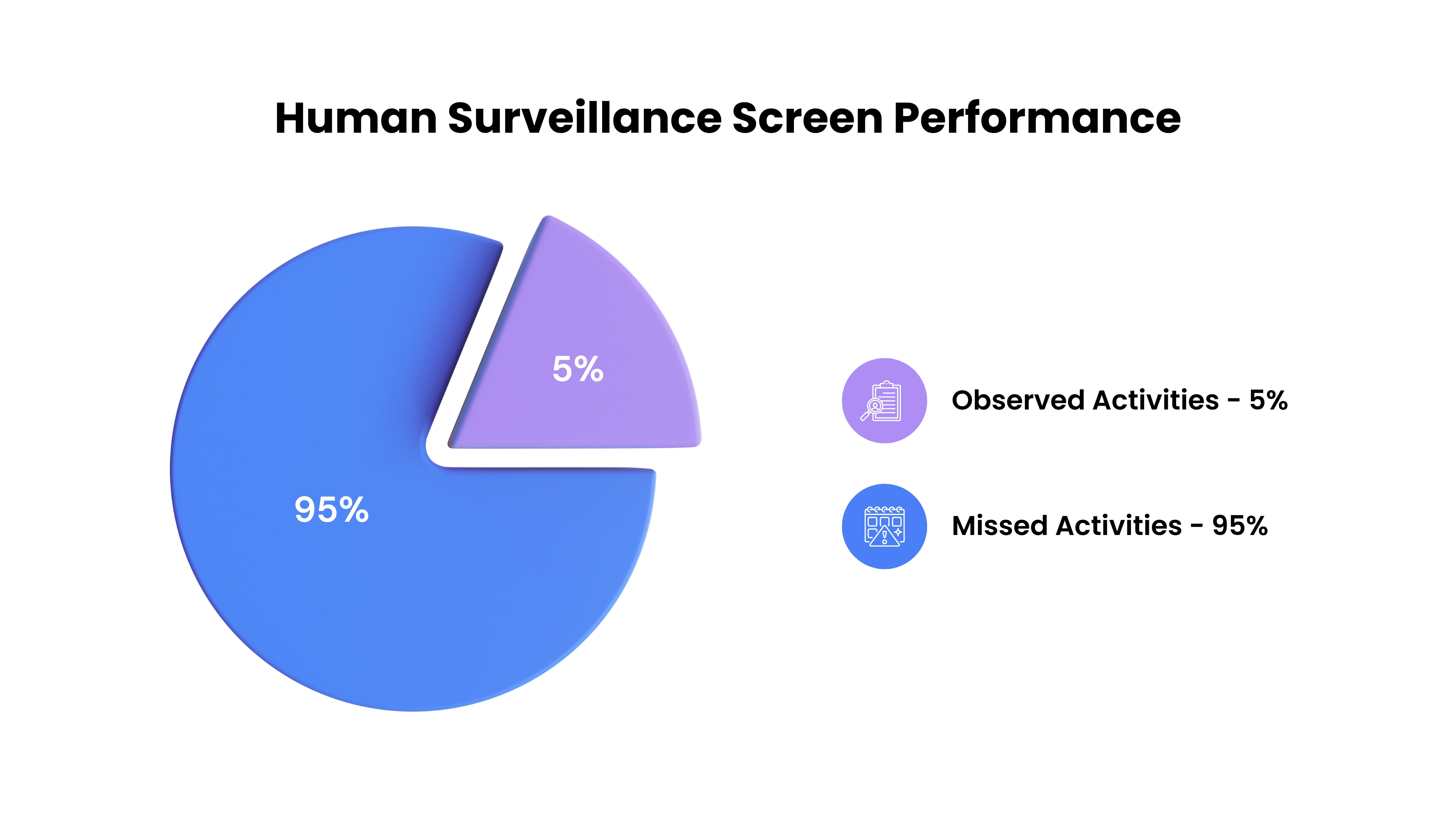
Humans miss up to 95% of important activity. after watching surveillance screens for extended periods.

Night Activity
Rodents are most active at night. Exactly when monitoring is weakest.
Passive Monitoring
Traditional cameras only show you what already happened. This is why organizations are implementing CCTV video analytics systems in pharma environments.
Instead of relying on human observation, AI analyzes every frame automatically. The system detects unusual movement patterns instantly.
That shift from passive monitoring to proactive detection is where things start to change.
How AI Video Analytics in Pharma Changes Pest Detection
Think of it this way.
Traditional cameras act like a storage drive. But AI video analytics systems in pharma give those cameras a brain.
Now the system doesn’t just record activity. It understands it. This creates several powerful advantages.
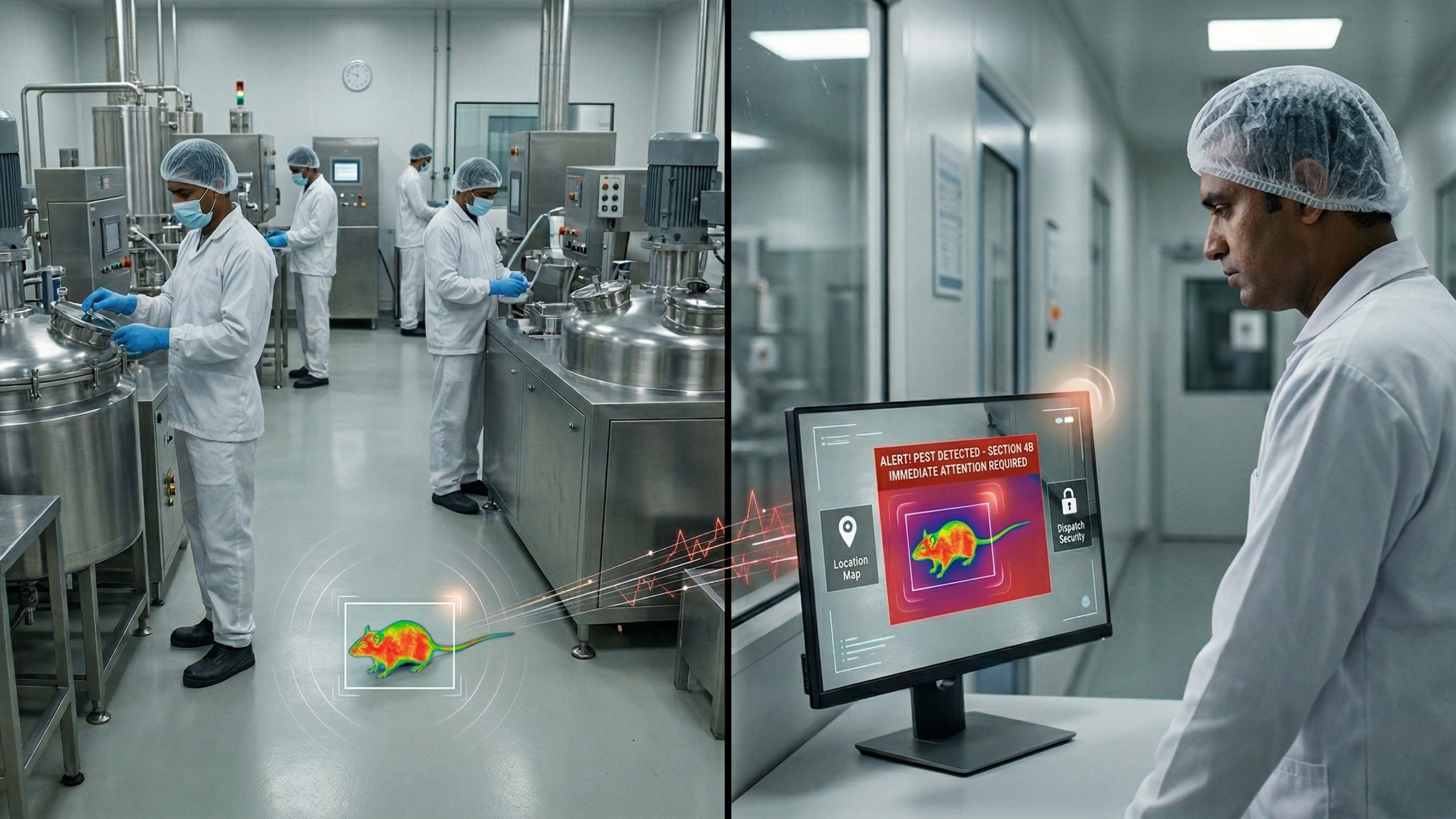
Biological Movement Detection
Using thermal imaging, AI can differentiate between shadows, debris, and actual pest movement.
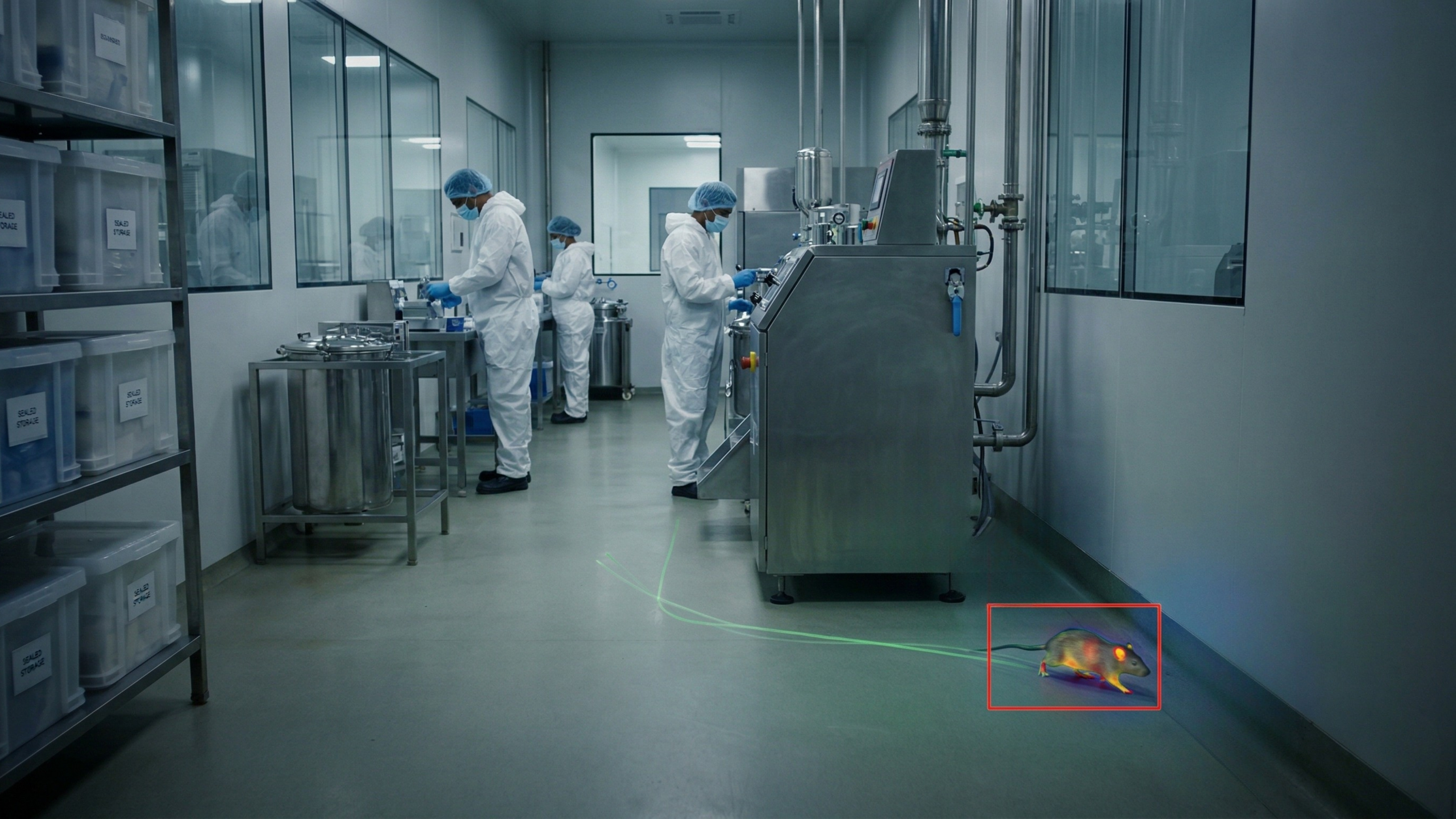
Instant Notifications
With real-time video analytics, alerts are triggered the moment abnormal activity is detected.
Facility managers receive notifications immediately.
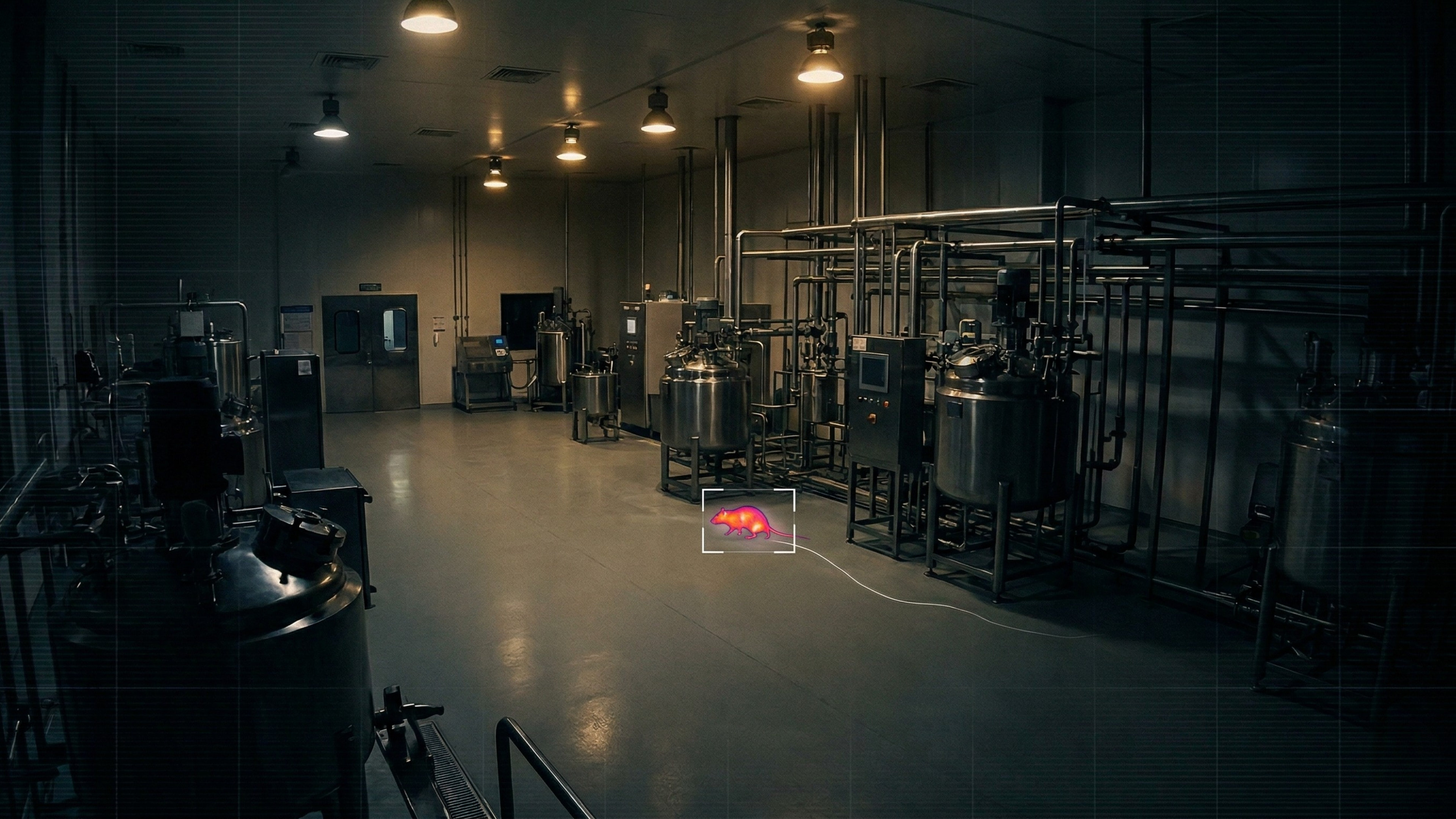
Night Detection
Rodents don’t wait for daylight.
AI systems can detect pest movement even in low-visibility environments. That’s why many manufacturers are adopting AI video surveillance in pharma facilities.
It provides a monitoring layer that never blinks, never gets tired, and never misses movement.
Detecting Patterns Before Infestations Begin
Rodents and other pests are creatures of habit.
They don’t wander randomly. They follow predictable routes.
Once AI video analytics systems in pharma begin analyzing facility footage, patterns start emerging.
- Repeated movement near a specific wall panel
- Activity near waste storage areas
- Rodent paths along warehouse shelving
Over time, these signals form heat-maps that a powerful video analytics platform can analyze, which in-turn helps the decision makers take corrective action.
Instead of guessing where pests might be entering, they can see the exact hotspots. Many of these contamination risks originate in specific production and access-control areas. Understanding the pharma deviation zones where compliance risks typically begin helps teams focus monitoring efforts more effectively.
Often, the fix is surprisingly simple.
These signals form heat-maps that help decision makers take corrective action.
- Replace a damaged door seal
- Seal a cable conduit
- Improve waste handling procedures
Without intelligent monitoring, those issues can remain hidden for months.
Built for Secure Pharmaceutical Environments
One common concern in pharma is data security.
Video data cannot simply be sent to external servers. That’s why modern systems like Mikshi AI prioritize on-premise secure video processing.
With on-premise deployment, video analysis happens inside the facility infrastructure.
This ensures:
- Regulatory compliance
- Controlled data access
- Faster detection speeds
Facilities gain the benefits of AI video analytics systems in pharma while keeping sensitive data protected.
Beyond Rodents: Other Risks that AI Can Detect
Once organizations deploy AI video analytics software in pharma, they quickly realize the system can monitor much more than pests.
It becomes a broader risk-management tool.
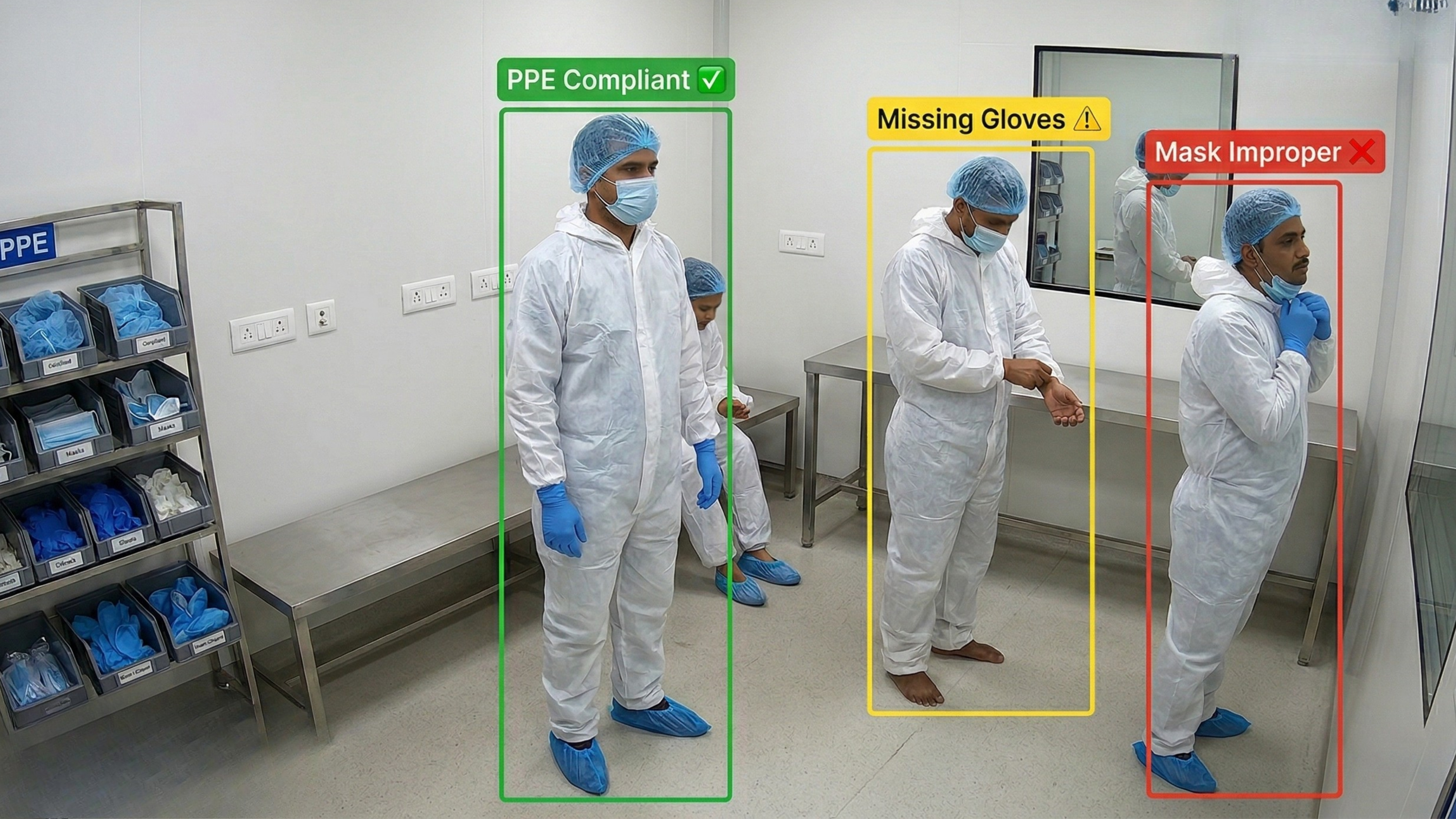
Gowning and PPE Compliance
AI systems can automatically verify whether staff entering controlled environments are wearing required protective equipment.
This helps enforce PPE compliance without manual supervision.
Many pharmaceutical manufacturers are extending these capabilities into broader AI-driven GMP compliance monitoring programs across cleanrooms and production areas.
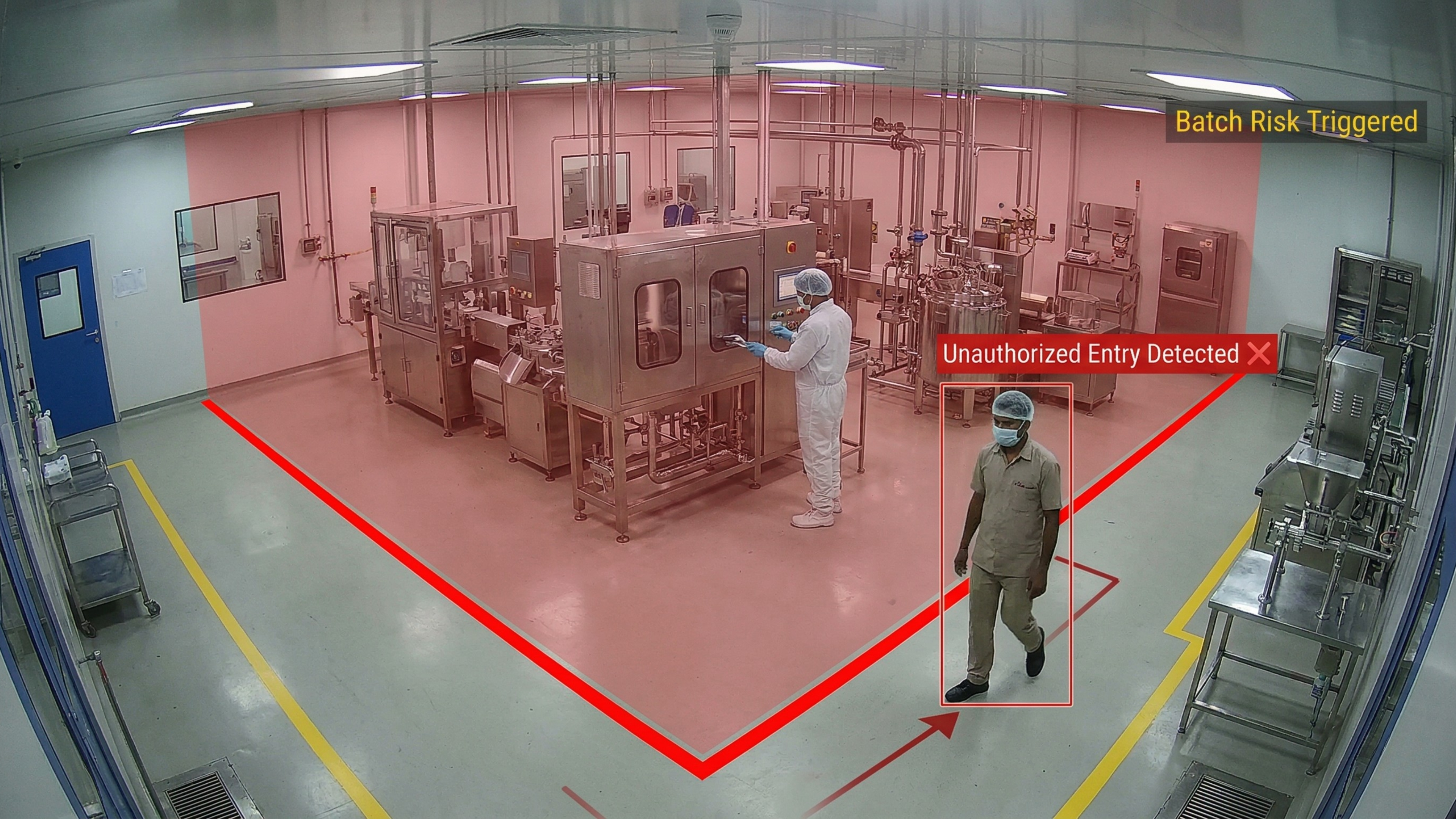
Restricted Zone Monitoring
Unauthorized entry into sterile areas can compromise entire production batches.
AI surveillance detects and flags these movements instantly.
This is why many regulated facilities deploy AI-powered restricted area monitoring to strengthen access control across sensitive production environments.
Environmental Risk Detection
The system can also identify abnormal activity, such as:
- Liquid leaks
- Unsafe movement
- Unusual behavior in storage zones
These capabilities highlight how the use of AI in pharmaceutical industry operations is expanding beyond security and into quality assurance.

The Business Case for Digital Vigilance
Eventually, someone in the boardroom asks the obvious question: Is the technology worth the investment? The answer becomes crystal clear when you look at the alternatives. In an industry where a single mistake can cost a decade of profit, an AI video analytics system for pharma environments acts like a safeguard for operational integrity.
Avoid Remediation Costs
The cost of an FDA-mandated cleanup is staggering. When a facility is cited for infestation, you don't just "buy traps."
- Inventory Loss: You aren't just tossing one batch; you are often destroying months of inventory that "might" have been exposed.
- Specialist Fees: Hiring experts to overhaul your sanitation SOPs can cost hundreds of thousands of dollars.
- The AI Advantage: By using an AI video analytics system in pharma, you stop the "incident" from becoming an "infestation," saving you from the "black hole" of remediation expenses.
Ensure Audit Readiness
Manual inspection logs are the bane of every QA Manager's existence. They are prone to human error and are often the first thing an inspector will tear apart.
- Digital Proof: Instead of showing regulators a handwritten log, you can pull up a dashboard that proves 24/7 continuous monitoring.
- Traceability: If a discrepancy is found, you can use real-time video analytics to find exactly when and where a breach occurred.
- Validation: Using high-tech AI video surveillance in pharma generates an objective data trail that is much harder for an auditor to challenge.
Build Operational Resilience
Beyond catching rodents, the real ROI is how the system keeps the factory running without hiccups.
- Supply Chain Continuity: A recall breaks your supply chain. If you can't ship, your competitors will fill your shelf space.
- Labor Efficiency: Instead of having a guard walk the perimeter every hour, your team only moves when the video analytics platform triggers an alert.
- Predictive Maintenance: AI can spot physical wear like a sagging ceiling panel before it becomes an entry point for pests.
Secure Data Integrity
In the world of Pharma 4.0, data is your most valuable asset. If your facility records are incomplete, your drugs aren't compliant.
- Objective Records: Human observers might miss a detail. A secure video processing system like Mikshi AI records every event with surgical precision.
- Risk Mapping: By analyzing trends, the system can predict which zones are at highest risk during specific seasons.
- CCTV ROI: You are finally using your existing CCTV cameras to generate actionable business intelligence that keeps the plant lean.
Turn CCTV Surveillance into a First Line of Defense For Your Pharma Plant
Pharmaceutical manufacturing is evolving rapidly.
Production speeds are increasing. Regulatory scrutiny is intensifying, and the cost of failure continues to rise.
Manual monitoring alone can’t keep up.
That’s why more facilities are turning toward AI video analytics systems like Mikshi AI in pharma.
Mikshi AI transforms your existing CCTV infrastructure into a real-time risk detection system built specifically for pharmaceutical environments.
With Mikshi AI, you can:
- Detect rodent and pest activity the moment it begins
- Monitor GMP compliance like PPE and restricted zone access
- Identify environmental risks before they impact production
- Maintain audit-ready, tamper-proof video records
- Deploy securely within your facility with on-premise processing
In an industry where a single unnoticed event can trigger massive consequences, early detection is everything.
Move from reactive to proactive monitoring
Book a demo with Mikshi AIIn this article
- The Adulteration Rule
- The Reputation Damage
- The Financial Impact
- The $34 Million Family Dollar Disaster
- The Scale
- The Recall
- The Financial Damage
- The Sun Pharma Warning Letter
- Why Traditional Monitoring Misses Contamination Risks
- Surveillance Fatigue
- Night Activity
- Passive Monitoring
- How AI Video Analytics in Pharma Changes Pest Detection
- Biological Movement Detection
- Instant Notifications
- Night Detection
- Detecting Patterns Before Infestations Begin
- Built for Secure Pharmaceutical Environments
- Beyond Rodents: Other Risks that AI Can Detect
- Gowning and PPE Compliance
- Restricted Zone Monitoring
- Environmental Risk Detection
- The Business Case for Digital Vigilance
- Turn CCTV Surveillance into a First Line of Defense For Your Pharma Plant


