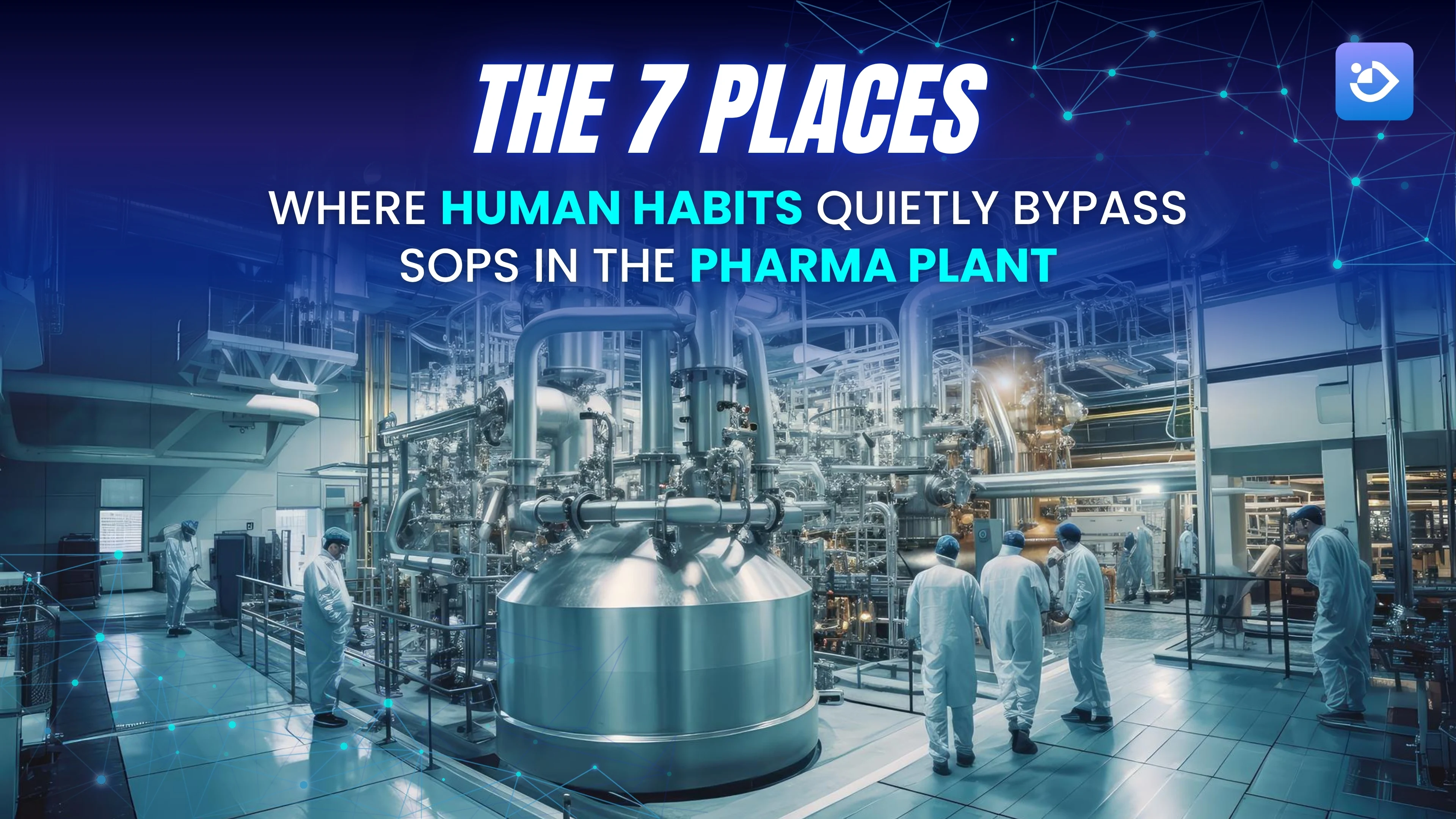
The 7 Places Where Deviations Start in a Pharma Plant
Go into a drug manufacturing facility on a busy production shift, and you'll see this:
Machines are operating, operators are running to and fro stations, and the supervisors are verifying batch records. Everything appears controlled. But many deviations do not begin with equipment failures or major system issues.
They begin with small human habits.
- A hand scrub skipped during a rush.
- An airlock door opened a little too soon.
- A line assumed to be cleared but never properly checked.
Individually, these moments feel insignificant. Yet they are often the starting point of larger compliance problems. In fact, studies show that human error contributes to nearly 70% of deviations in regulated manufacturing environments.
This is where AI video analytics in pharma is starting to change how plants monitor compliance.
Why SOP Violations Still Happen in Modern Pharma Plants
Pharmaceutical plants are some of the most controlled environments in the world.
There are SOPs for everything. Entry procedures. Cleaning protocols. Batch documentation. Equipment handling.
Yet deviations still happen.
Not because people are careless.
But because real operations move quickly.
Operators work under time pressure. Supervisors manage multiple areas. Quality teams handle documentation, sampling, and inspections all at once. And traditional surveillance systems are not designed to help much.
They simply record video.
They do not understand what is happening.
This creates several blind spots inside a facility:
- Security teams must review hours of footage manually
- Critical zones operate simultaneously across the plant
- Small SOP steps may be skipped during busy shifts
- Minor issues accumulate until they become compliance findings
Picture a typical scenario.
During a shift change, operators are entering a cleanroom quickly so the line does not stop. One technician skips a hand scrub step.
The camera records everything.
But no one notices.
Weeks later, the moment appears during an audit review.
That is the gap AI video surveillance in pharma is designed to close.
Rather than archiving the events to be reviewed later, intelligent systems process video feed in real time and notify the supervisors whenever something suspicious occurs.
How AI is Changing Compliance in the Pharmaceutical Industry
In the regulated industries, firms are starting to reconsider the way they conduct surveillance operations.
Manual supervision alone is no longer enough.
According to industry research, the AI in the pharmaceutical industry landscape is expanding as companies adopt intelligent systems to strengthen compliance and operational visibility.
Instead of relying only on manual observation, plants can now use real-time video analytics to monitor activity continuously.
That changes how compliance works inside a facility.
With intelligent monitoring systems:
- Cameras automatically detect SOP violations
- Supervisors receive instant alerts
- Operators get immediate feedback when protocols are missed
- Compliance teams gain searchable digital records
Think about how investigations usually happen today.
- A deviation is reported.
- The team searches through hours of CCTV footage.
- Eventually they find the moment something went wrong.
With AI monitoring, that process becomes much simpler.
The system already knows when the event happened.
In other words, AI in pharma turns passive cameras into active compliance tools.
Organizations looking to strengthen audit readiness are increasingly adopting AI-driven GMP compliance monitoring to maintain continuous visibility across critical production environments.
The 7 Zones Where Deviations Quietly Begin in a Pharma Plant
Most deviations do not begin with equipment failures.
They begin with everyday human actions.
Across pharmaceutical plants, there are several areas where SOP shortcuts tend to happen more often than others.
These zones are where intelligent monitoring delivers the most value.
Let’s walk through them.
Zone 1: Gowning Discipline
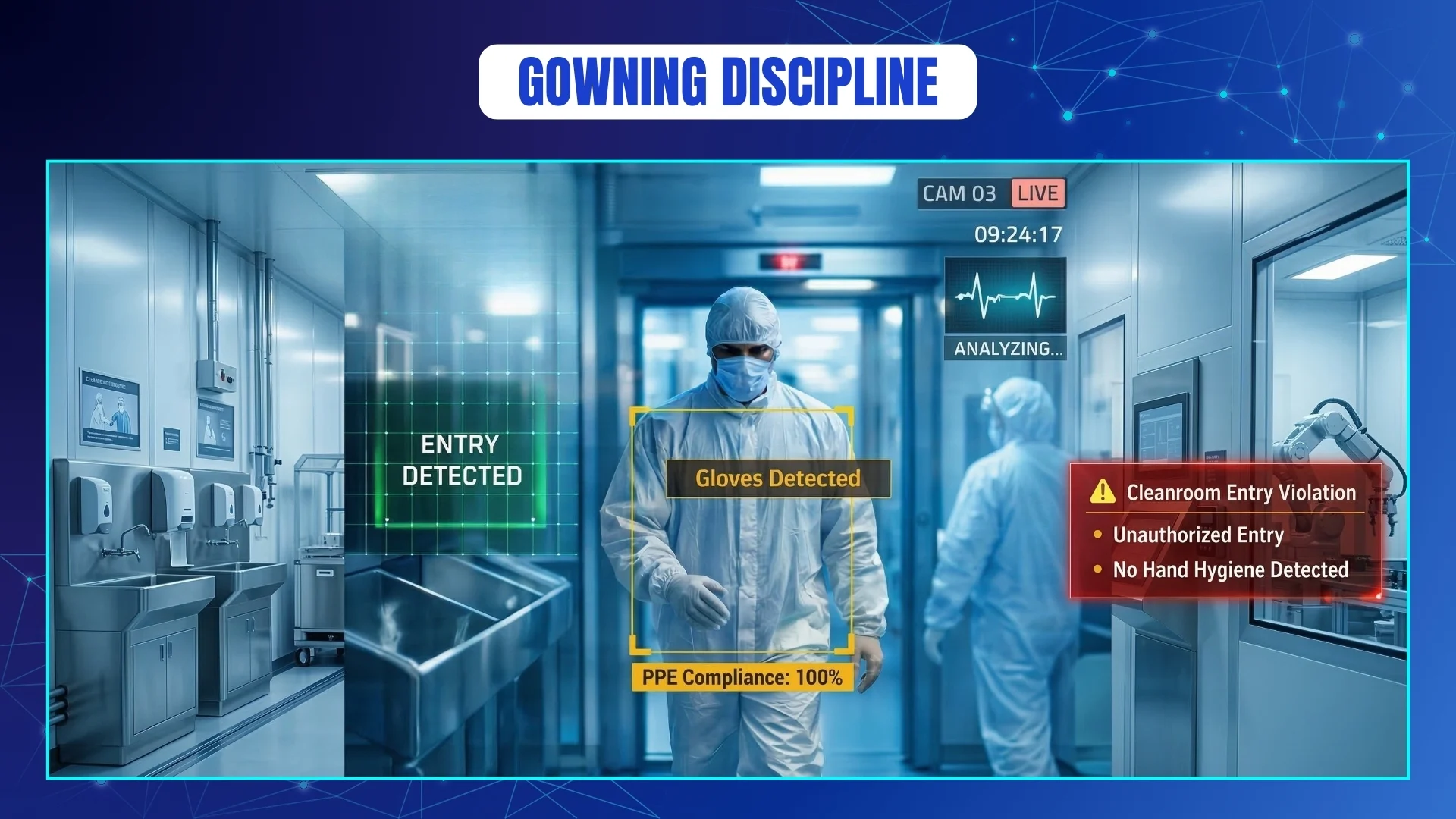
Cleanroom gowning protocols exist for a simple reason.
They protect sterile environments from contamination.
But during busy shifts, gowning areas can become rushed.
Operators are entering quickly. The production line is waiting. Someone assumes a step was already completed.
Common issues include:
- Incomplete hand scrubbing
- Incorrect gowning sequence
- Missing protective gear
- Improper cleanroom entry procedures
These are exactly the types of issues modern AI PPE detection systems for pharma and API manufacturing are designed to identify automatically.
Traditional CCTV cameras record these actions but do not evaluate them.
With real time video analytics, the system can automatically:
- Verify hand hygiene steps
- Confirm correct gowning sequence
- Alert supervisors when entry protocols are skipped
As an illustration, when an operator visits the cleanroom without going through the necessary action, the system notifies the event immediately.
The supervisor can take action on the spot rather than finding out the issue after.
Zone 2: Material Airlock Interlocks
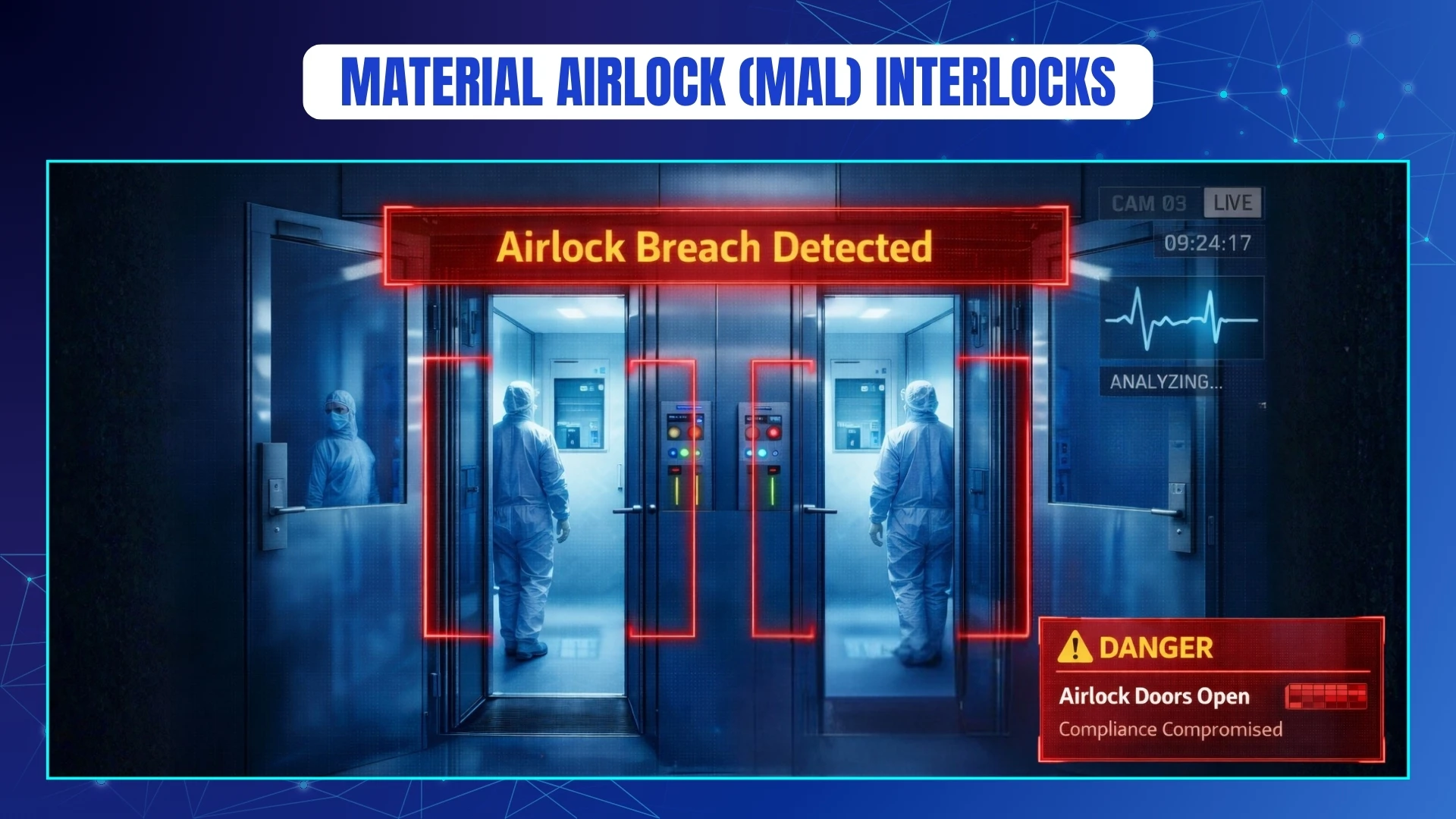
Material airlocks protect controlled environments from contamination and pressure imbalance.
But they rely heavily on human discipline.
Common deviations include:
- Both airlock doors opening simultaneously
- Incorrect material transfer procedures
- Illegal entry into the airlock.
These events might not appear significant, but during the audits, they create profound compliance issues.
Using AI video surveillance in pharma, systems can detect:
- Simultaneous door openings
- Unauthorized access attempts
- Unusual activity around airlock areas
For example, if both doors open within seconds of each other, the system logs the event automatically and alerts the team.
Zone 3: Line Clearance Vigilance
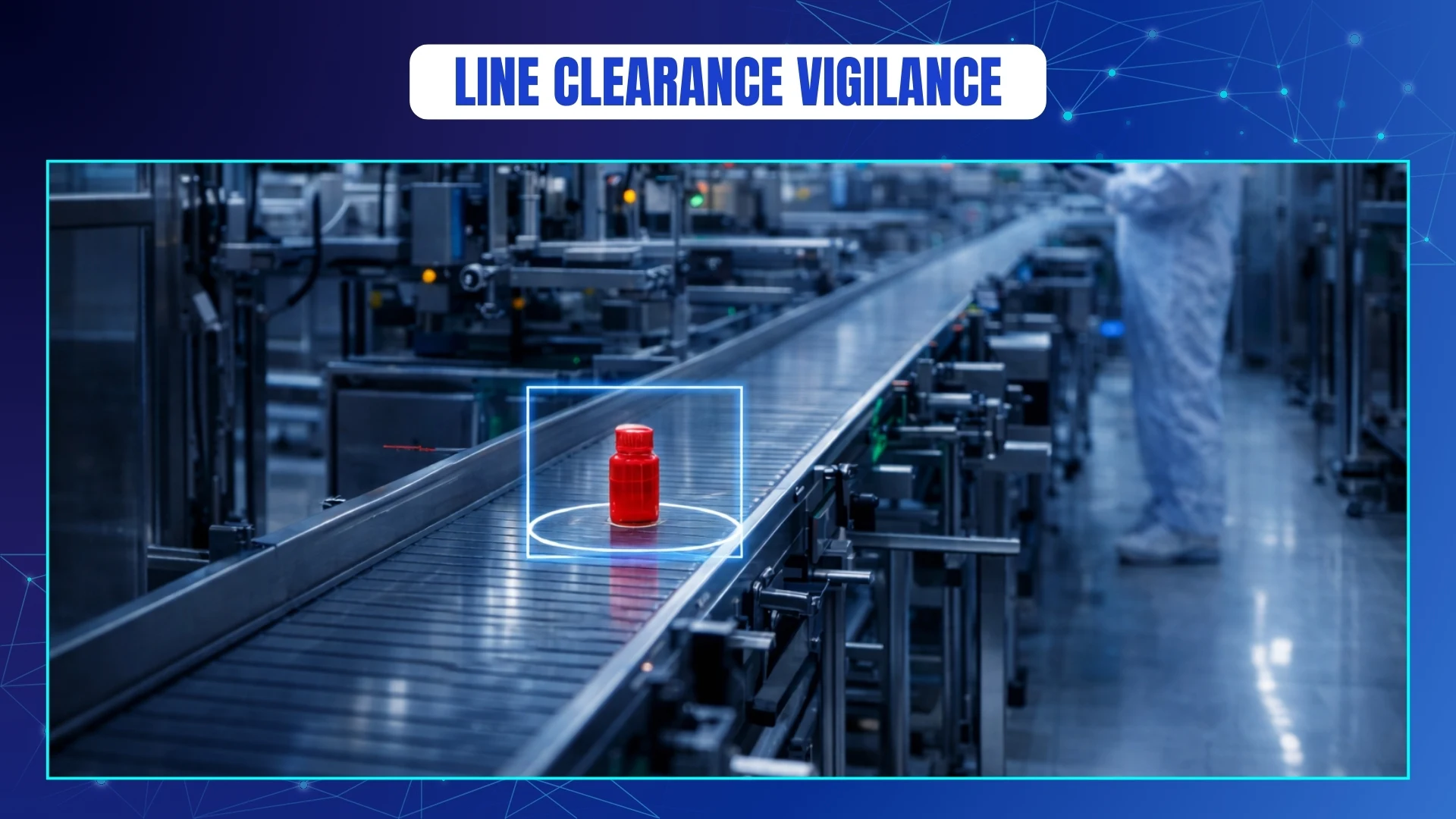
Before a new batch begins, line clearance must be completed.
The objective is simple.
Make sure nothing from the previous batch remains on the production line.
But in reality, deviations still occur.
Why?
Because people assume the process was already completed.
Common issues include:
- Operators assuming the line was cleared
- Documentation signed before verification
- Small materials missed during inspection
With AI video analytics in pharma, monitoring systems can support quality teams by verifying whether line clearance actually happened.
The system can:
- Detect objects left on conveyors
- Track cleaning activity
- Record verification steps
Imagine a conveyor belt where leftover items from a previous batch remain.
Instead of discovering it later, the system alerts the team immediately.
Zone 4: Safe Sampling Protocols
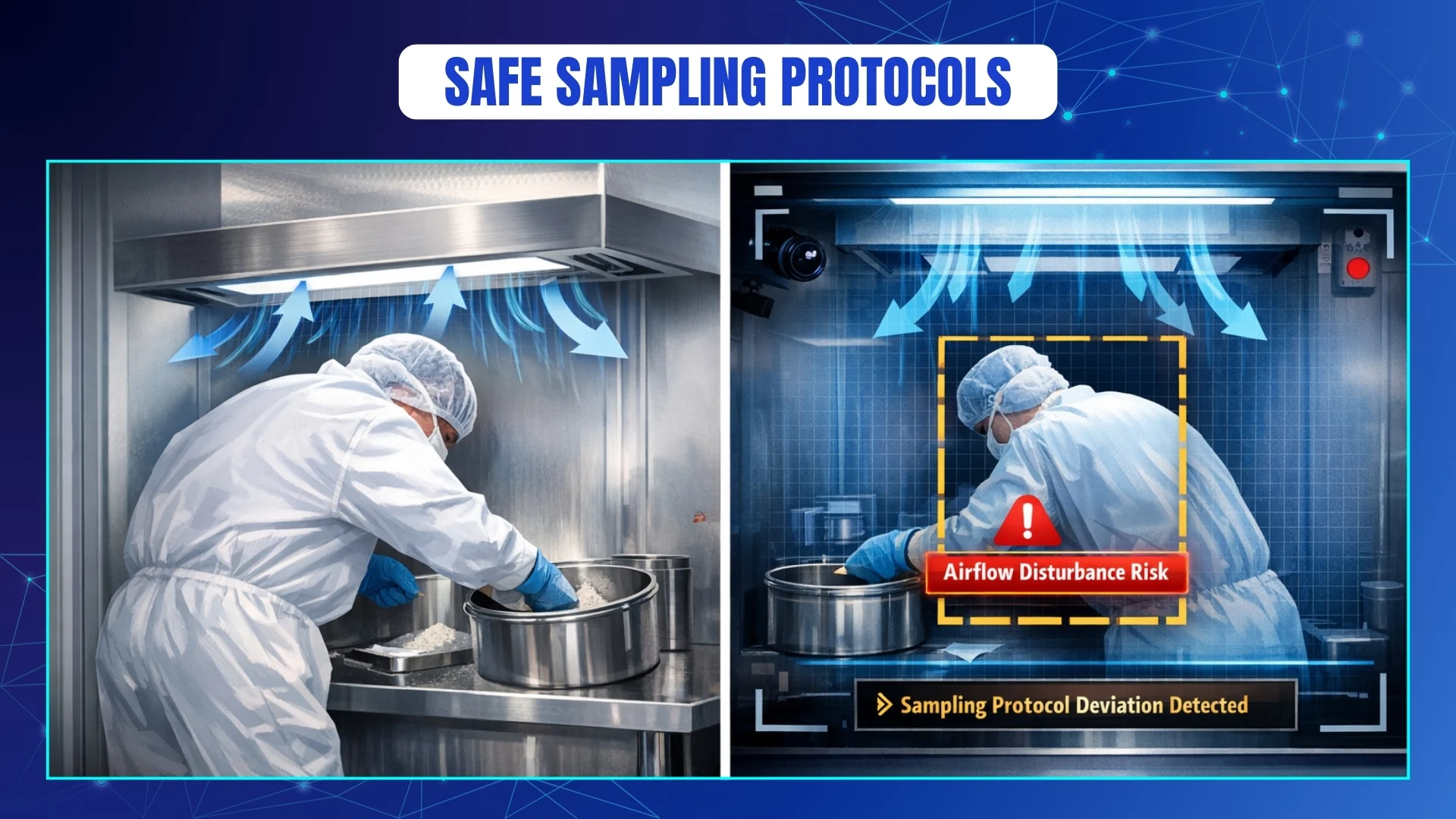
Sampling booths are carefully designed environments.
Airflow is controlled. Movement patterns are defined. Materials must be handled in specific ways.
But sampling is still a human activity. And small behavioral mistakes can disturb controlled airflow.
Common issues include:
- Incorrect positioning inside the booth
- Movement that disrupts airflow
- Improper handling of materials
Using real-time video analytics, plants can monitor:
- Operator positioning
- Movement patterns inside the booth
- Compliance with sampling procedures
If someone blocks an airflow vent or moves outside the designated area, the system detects the deviation instantly.
Zone 5: Rodent Intrusion Monitoring
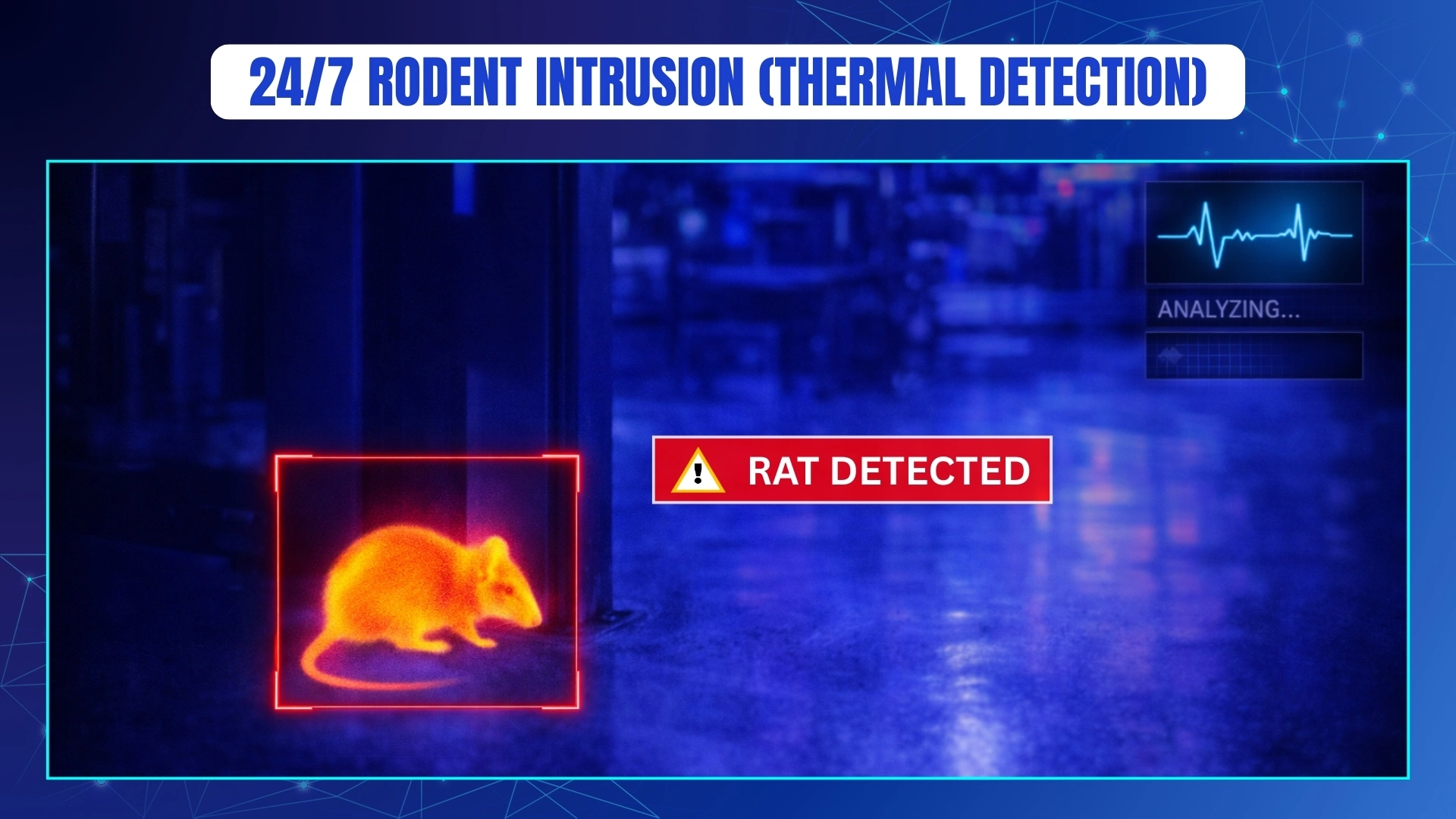
Rodent contamination is a severe contamination hazard in pharmaceutical settings.
The conventional methods of pest control are based on inspections, traps, and routine inspections.
But rodents do not operate on inspection schedules.
With thermal detection and CCTV video analytics in pharma, intelligent monitoring systems can:
- Detect small moving heat signatures
- Monitor high risk areas like warehouses
- Trigger alerts during night hours
As an illustration, when a rodent runs along a wall in the warehouse at late hours, the system detects the movement immediately and notifies the team in the facility.
The financial and compliance consequences of contamination can be significant, which is why many manufacturers are investing in AI video analytics for rodent prevention in pharmaceutical facilities.
Zone 6: Restricted Zone Timing Violations
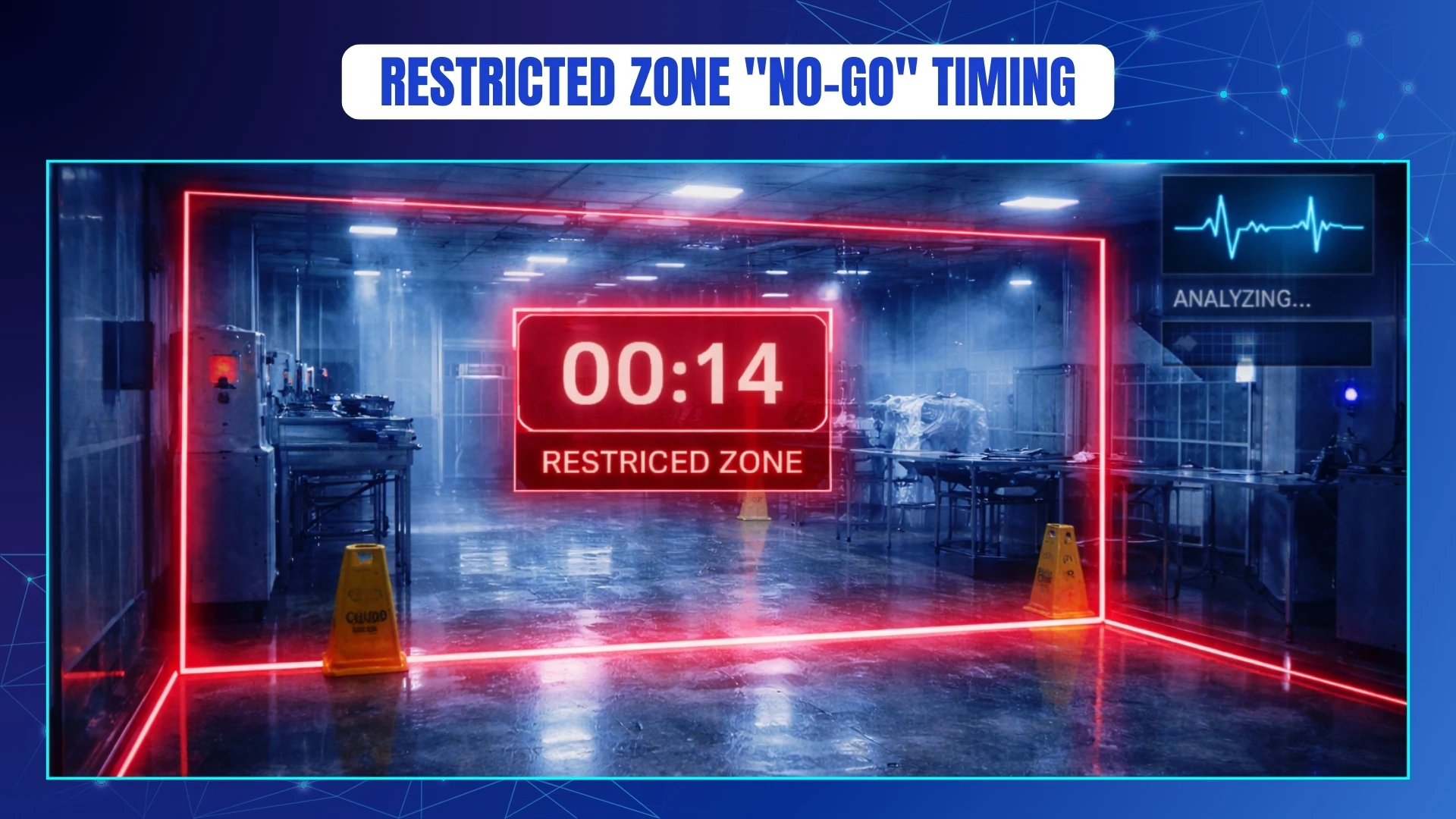
Certain zones inside pharmaceutical plants require strict timing rules.
Examples include:
- Sterilization cycles
- Settling time after cleaning
- Restricted access during operations
These rules protect product integrity.
But violations occur when someone enters the area too early.
Using on-premise video analytics, systems can monitor:
- Entry into restricted areas
- Time spent inside controlled zones
- Compliance with waiting periods
Many facilities also deploy AI-powered restricted area monitoring to strengthen access control across cleanrooms and controlled production environments. If someone enters a sterilized zone before the required settling time, the system flags the event instantly.
Zone 7: Waste and Rejection Accountability
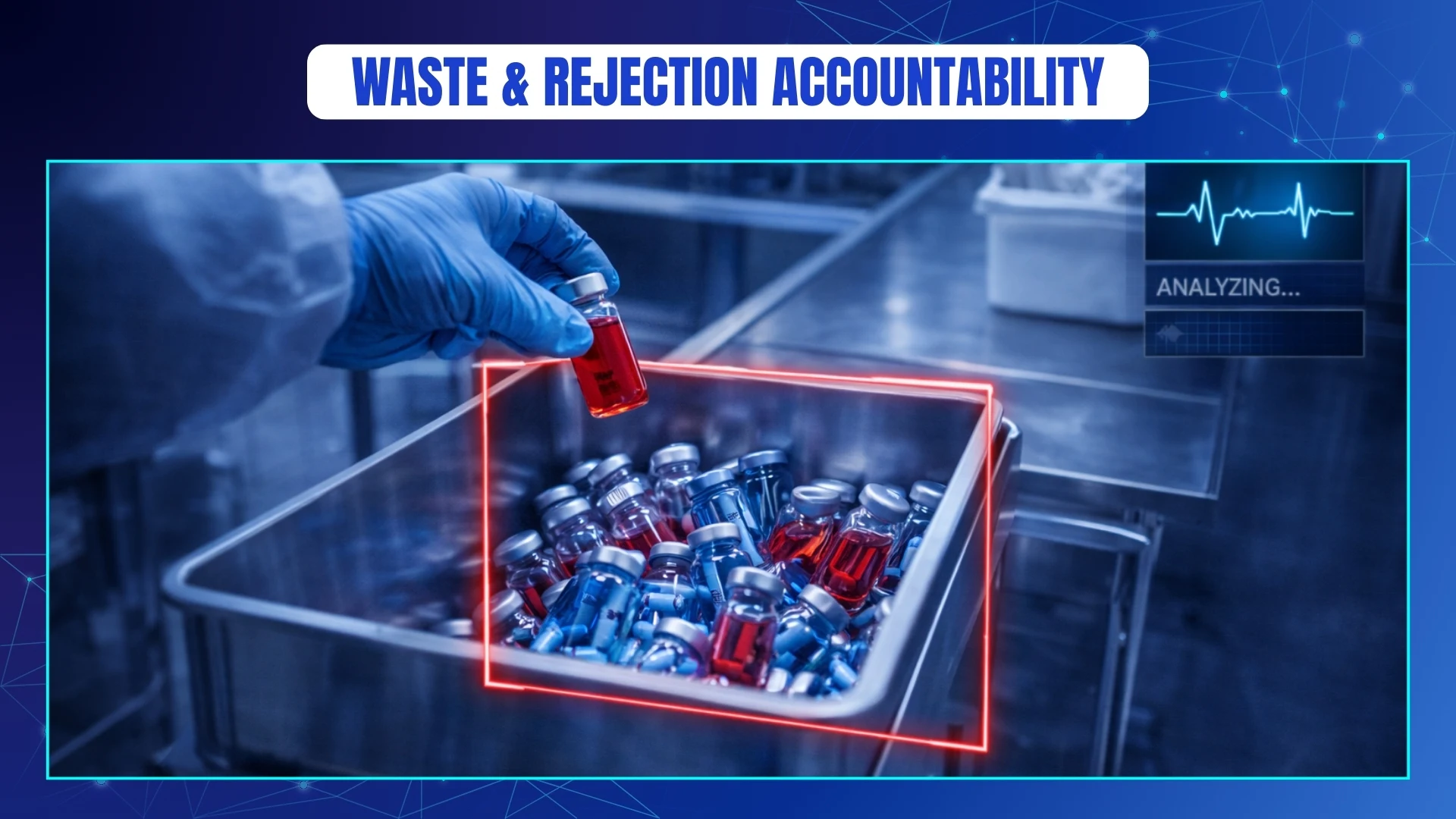
Handling rejected products properly is critical for reconciliation and compliance.
However, deviations sometimes occur when:
- Rejected materials are moved outside designated areas
- Waste bins are accessed by unauthorized staff
- Reconciliation steps are incomplete
With AI video analytics in pharma, monitoring systems can track how rejected materials are handled.
The system can:
- Verify disposal procedures
- Detect unauthorized access
- Track movement of rejected products
If rejected vials are removed from a disposal zone improperly, the system logs the event and alerts the compliance team.
Why Pharma Plants Prefer On-Premise Video Intelligence
Pharmaceutical companies operate under strict regulatory requirements.
Data security is a major concern.
That is why many facilities choose on-premise video analytics deployments.
This approach provides several advantages:
- Full control over operational data
- Compliance with internal security policies
- Reduced dependency on external cloud infrastructure
At the same time, modern platforms integrate with a video management system that allows centralized monitoring across facilities.
This allows plants to scale intelligent monitoring while maintaining strict data control.
The Human + AI Advantage for Inspection Readiness
Pharmaceutical plants will always rely on human expertise.
Operators run the processes.
Quality teams enforce standards.
Supervisors oversee operations.
But humans cannot watch hundreds of cameras simultaneously.
When human expertise is combined with AI video analytics in pharma, plants gain a powerful advantage.
They achieve:
- Continuous compliance monitoring
- Faster response to operational risks
- Greater visibility across the facility
Instead of discovering issues during inspections, teams can correct them immediately.
And that leads to a powerful outcome.
Every day becomes inspection ready.
AI Video Analytics: One Simple Step to a Smarter Plant
Pharmaceutical manufacturing demands precision, discipline, and strict compliance.
Yet many deviations begin with small human shortcuts that go unnoticed during busy operations.
Traditional surveillance systems record these moments.
But they rarely prevent them.
Intelligent monitoring changes that.
By adopting AI in pharmaceutical industry operations, organizations can transform existing cameras into proactive compliance tools.
And the best part is simple.
You will not have to upgrade your infrastructure.
It only requires that you make it smarter.
When cameras start analyzing, detecting, and notifying, pharmaceutical plants will have something much better than surveillance.
They gain clarity.
In this article
- Why SOP Violations Still Happen in Modern Pharma Plants
- How AI is Changing Compliance in the Pharmaceutical Industry
- The 7 Zones Where Deviations Quietly Begin in a Pharma Plant
- Zone 1: Gowning Discipline
- Zone 2: Material Airlock Interlocks
- Zone 3: Line Clearance Vigilance
- Zone 4: Safe Sampling Protocols
- Zone 5: Rodent Intrusion Monitoring
- Zone 6: Restricted Zone Timing Violations
- Zone 7: Waste and Rejection Accountability
- Why Pharma Plants Prefer On-Premise Video Intelligence
- The Human + AI Advantage for Inspection Readiness
- AI Video Analytics: One Simple Step to a Smarter Plant


