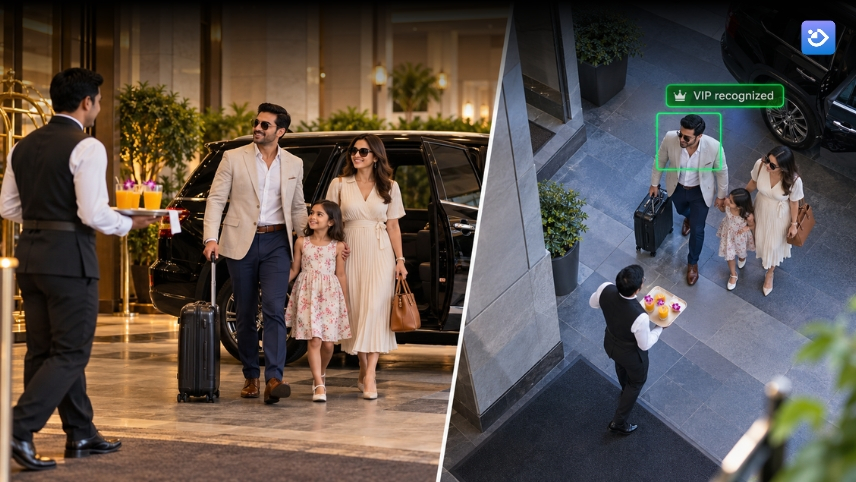
VIP Guests Should Never Have to Ask: How an AI Video Analytics System for Hotels Gets Your Team There First
It is 7:40 on a Friday evening. A taxi pulls into your porch, and out steps the guest who has booked your best suite three times this year, with his wife and two children behind him. The bell desk takes the bags. Inside, your front office associate is halfway through a walk-in's ID verification, the duty manager is on a call about tomorrow's banquet, and the butler assigned to the suite is two floors away, waiting for a call that has not come. Your most valuable guest of the month is now standing in a queue behind a couple disputing a card hold.
He waits four minutes. He says nothing about it. He does not need to, because he will say it the next time he chooses where to stay.
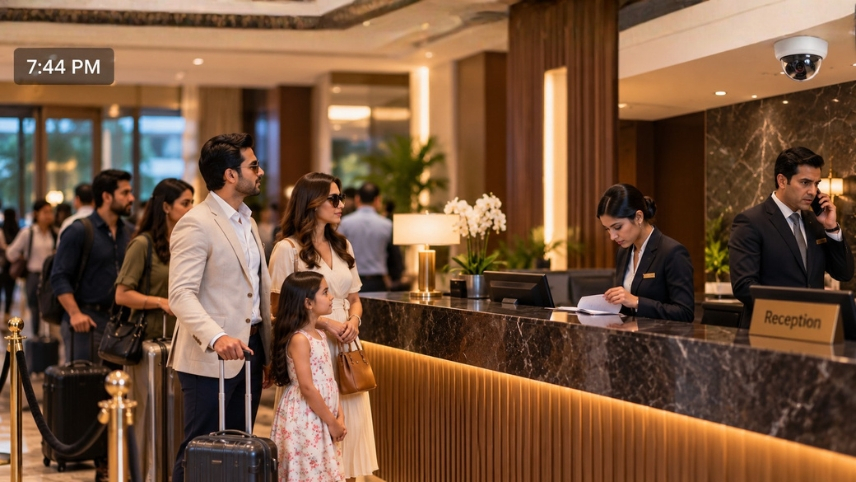
Here is the uncomfortable part. Nobody on your team did anything wrong. The reservation was in the system, his preferences were on file, and the porch camera recorded his face the moment he stepped out of the taxi. What was missing was a signal: something that connected the camera that saw him to the people who should have walked out to meet him.
That is exactly the kind of gap an AI video analytics system for hotels is built to close. Most properties bought their CCTV for security and still think of it that way. Pointed at the right moments, the same cameras can become the quiet service layer behind every luxury hotel guest experience your brochure promises.
Why the Front Desk Is the Wrong Place to Recognize a VIP
The traditional VIP welcome depends on a chain of people. Reservations flags the arrival, the front desk prints a list, the doorman is told to watch for a car, and everyone hopes the flight lands on time. One delayed taxi or one shift change breaks the chain, and guests notice.
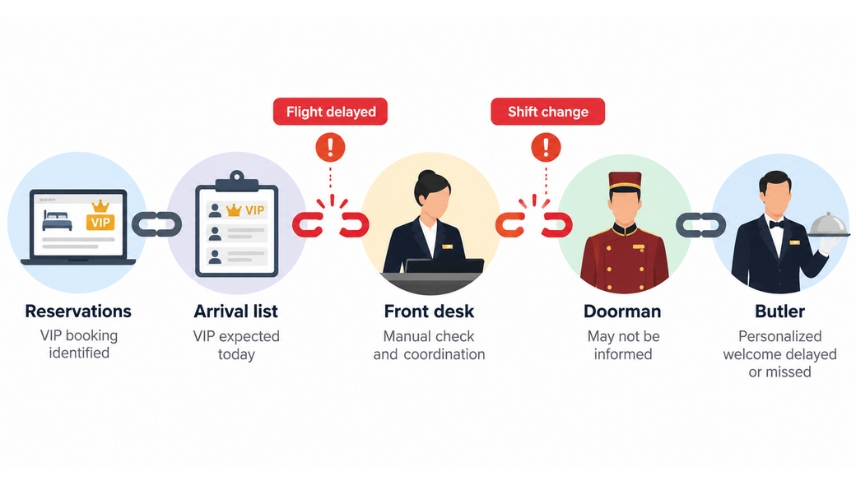
Guest expectations have moved faster than front-office processes. According to McKinsey, 71 percent of consumers expect companies to deliver personalized interactions, and 76 percent get frustrated when that does not happen. At the top end of hospitality, a personalized guest experience means being recognized without having to introduce yourself.
- Arrival lists go stale the moment a flight is delayed or a guest turns up early. The list says 3 PM. The guest is at the porch at 11 AM.
- Recognition happens too late in the journey. By the time the desk confirms the name, the first impression has already been formed at the porch, in the lobby and in the queue.
- Your sharpest staff cannot stand at every entrance. A property with a porch, a lobby, a lift bank, three restaurants and a spa has more doors than it has people watching them.
- A slow check-in becomes a rushed room handover, which becomes "Do you have a reservation?" at dinner. Small delays compound across a stay.
Volume makes this harder. India recorded 428.55 crore domestic tourist visits in 2025 [Ministry of Tourism, India Tourism Data Compendium 2026], and busy properties are exactly where VIPs disappear into the crowd. A longer arrival list will not fix that. Earlier information will, and that is precisely what hospitality video analytics is designed to deliver.
What a Camera-Triggered VIP Welcome Looks Like, Moment by Moment
Picture the same Friday evening with one change. The cameras you already own are connected to a system that knows which guests your team has marked as VIPs, and those guests have agreed to be recognized. Nothing about the guest's journey feels technical. Everything about your team's timing changes.
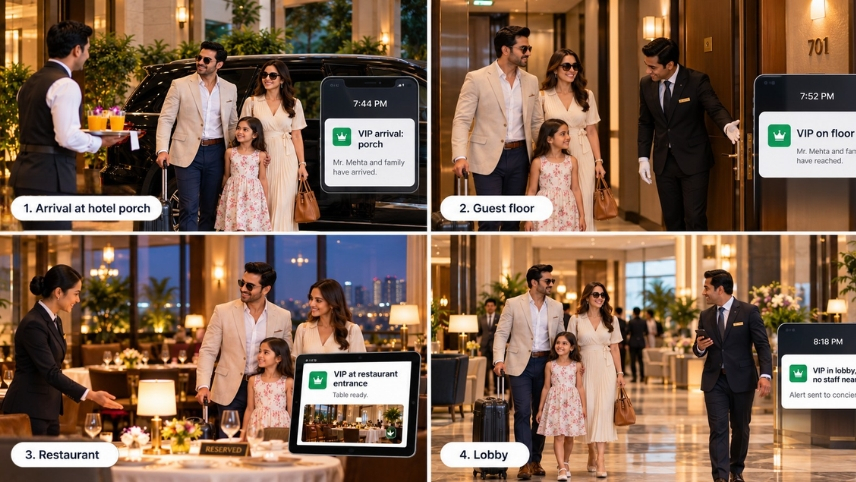
- At the porch. The camera matches the arriving guest to the VIP list, and the duty manager's phone shows "VIP arrival: porch." The host walks out holding the key card and a welcome drink. The family never sees the front desk.
- On the floor. When he steps out of the lift on the seventh floor, the butler's device lights up. The suite door is already open by the time he turns the corridor.
- At dinner, the restaurant host gets a tablet alert as he reaches the entrance, greets him by name, and walks him to the window table that was reserved for him, when he confirmed that he wanted dinner, which was at the time of the booking. Nobody asks whether he has a reservation.
- In the lobby, he is standing still with his phone in hand, looking anxiously here and there, and no staff member nearby. That combination nudges the concierge, who walks over before the guest has to look for help.
None of these moments needs a new desk, a wristband, or an app download for the guest. Each one is simply a camera telling the right person, at the right moment, that someone important needs them now. Hotel restaurants already use the same camera network for kitchen hygiene and food safety compliance, so in most properties, the hardware is already in place.
How VIP Guest Recognition Works on the Cameras You Already Own
The mechanics are simpler than most hoteliers expect. VIP guest recognition is a software layer that sits on top of your existing CCTV and looks for specific, pre-approved faces in specific, pre-defined zones. Everything else in the frame is ignored.
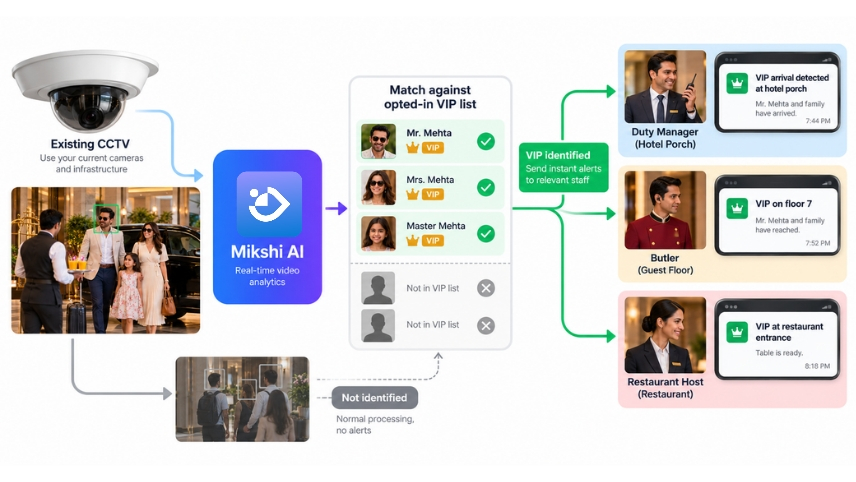
- Enrollment comes first. A guest who has opted in shares a photo at booking, through your loyalty program, or during a previous stay, and that image becomes the reference.
- Zones are mapped to people. The porch camera alerts the duty manager, the floor camera alerts the butler, and the restaurant entrance alerts the host. Each role sees only what it needs.
- Alerts reach phones, tablets, or the front office dashboard within seconds, carrying the guest's name, location, and any notes your team has added.
- Guests who are not enrolled are not identified.
Because the analytics run on cameras you already own, there is no rip-and-replace project and no construction in guest areas. Most of the work is deciding who should be recognized, where, and who should be told. If you want the wider picture, this breakdown of the real difference between CCTV and AI video analytics explains why the shift is about software, not new hardware.
Your cameras already saw your last VIP arrive. Did anyone on your team find out in time?
Try Mikshi AI for FREEto fix this.
The Privacy Question Your Legal Team Will Ask First
Recognizing guests by face raises a fair question, and any hotel that skips it is building a problem into the project. India's Digital Personal Data Protection Act, 2023 expects personal data to be processed for a lawful, stated purpose, with consent where consent is the basis, and gives individuals the right to withdraw it. A VIP recognition program has to be designed around that from the first day.
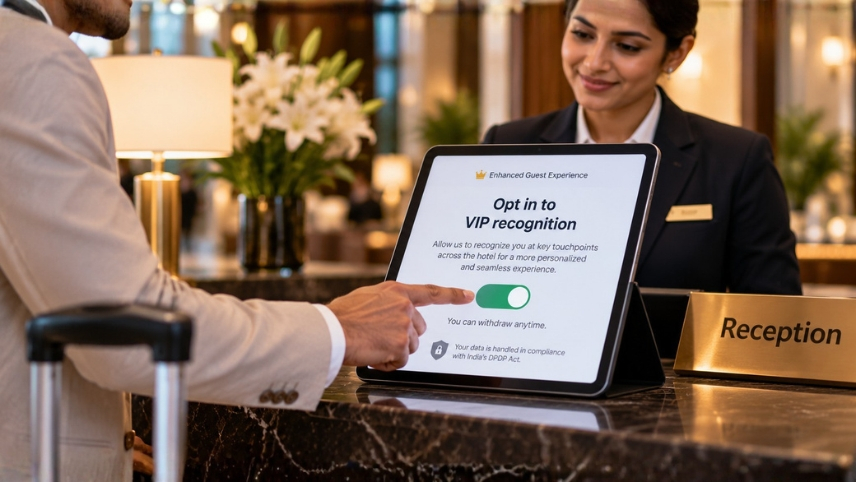
- Make it opt-in, always. Only guests who have explicitly agreed should be enrolled. Everyone else is simply not in the system.
- Tell guests what recognition is for: a faster, more personal welcome.
- Give guests a clean exit. Withdrawing consent should remove their reference image without a phone call to head office.
- Keep alert logs for short periods and restrict who can view them.
Handled this way, recognition becomes a service the guest chose, much like sharing a pillow preference or an anniversary date. Obligations depend on how your property collects and stores data, so review the specifics with your legal counsel before rollout.
Beyond the VIP Moment: What the Same Cameras Do for Every Other Guest
A system that only served VIPs would be hard to justify on a budget sheet. The stronger business case for hotel video analytics is that the same cameras and the same software also work for every guest who is not on any list.
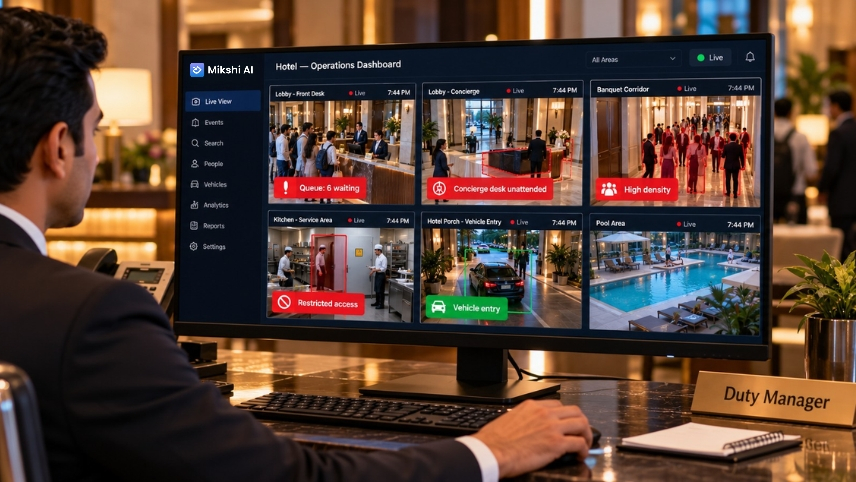
- Queue and wait-time monitoring at the front desk tells the duty manager to open a second counter before a line forms, not after the complaints start.
- Staff presence monitoring flags an unattended concierge desk, an empty restaurant podium, or a pool deck with nobody watching it.
- During weddings, conferences, and festival weekends, crowd density alerts warn you when lobbies and banquet corridors are filling faster than your team can manage.
- Restricted area monitoring keeps guests out of kitchens and service corridors and keeps unauthorized people off guest floors.
- Parking and entry monitoring gives security a live view of who and what is coming onto the property.
This is the point where hospitality cameras stop being a cost centre and start protecting revenue. For a deeper look, read how AI video analytics helps hotels and restaurants reduce revenue leaks across queues, staffing, and occupancy.
Four Mistakes Hotels Make When They Roll This Out
The technology is rarely the reason a VIP recognition project disappoints. The rollout usually is. Ask any general manager who has inherited a half-used security system.
- Too many alerts. If the butler's phone buzzes for every shadow and passing trolley, he will stop checking it within a week. Accuracy matters far more than volume, which is why it is worth understanding why some AI cameras see "ghosts" and how a well-built system filters them out.
- Enrolling everyone with a loyalty card. Recognition loses its meaning when half the lobby triggers it, so keep the list short and genuinely high-value.
- An alert sent to five people is an alert nobody acts on. Map every zone to exactly one responder, with a named backup.
- Skipping measurement. Track time from porch to room, repeat stays among recognized guests, and service complaints. If those numbers are not moving, adjust the zones or the list.
Get these four right, and the system disappears into the background, which is exactly where good service technology belongs.
How Mikshi AI Closes the Gap Between "The Camera Saw Him" and "Your Team Was Ready"
Go back to that Friday evening. The guest stood in a queue not because your team lacked skill, but because the camera that saw him had no way to tell anyone. That missing signal is the gap Mikshi AI was built to close.
Mikshi AI connects to the CCTV cameras your property already has and turns live footage into alerts that reach the right person on the right device. Our hospitality video analytics solution is designed for hotels, resorts, and restaurants that want their cameras to support service, safety, and operations simultaneously.
- Real-time alerts for enrolled guests at the porch, lobby, guest floors, and restaurant entrances, routed by role
- Queue, crowd, and staff presence monitoring that covers every guest on every shift
- Restricted area and after-hours monitoring for back-of-house zones and guest floors
- No new camera hardware, with enrollment built around guest consent
Recognizing people across a large site is familiar ground for us. At Mandsaur University, across a campus of more than 90 acres, Mikshi AI delivered 60 percent faster unauthorized person detection. The same capability that spots someone who should not be there can tell your team the moment someone important arrives.
Every VIP who waits at your front desk is a booking decision being made somewhere else.
Try Mikshi AI for FREEand keep the VIP revisiting your property.
In this article
- Why the Front Desk Is the Wrong Place to Recognize a VIP
- What a Camera-Triggered VIP Welcome Looks Like, Moment by Moment
- How VIP Guest Recognition Works on the Cameras You Already Own
- The Privacy Question Your Legal Team Will Ask First
- Beyond the VIP Moment: What the Same Cameras Do for Every Other Guest
- Four Mistakes Hotels Make When They Roll This Out
- How Mikshi AI Closes the Gap Between "The Camera Saw Him" and "Your Team Was Ready"


