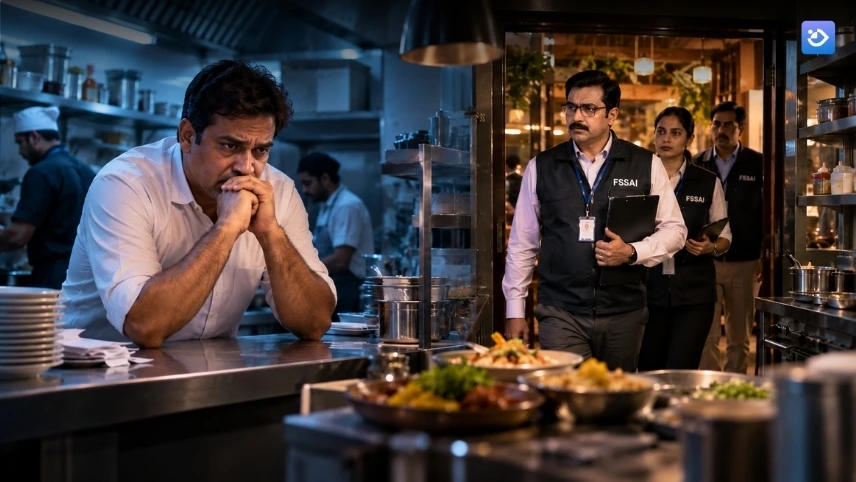
Your Restaurant Doesn't Need to Panic Before FDA Inspections
Sanjay built his restaurant with his father's retirement savings and six years of eighty-hour weeks. Tonight, he is scrolling his phone at eleven, hearing his wife's voice from an hour ago: " you know, Meena's place got raided this morning, shut down on the spot".
Meena was his wife's friend, who ran a restaurant three streets away, same footfall, same staff size. He ate there last month.
He barely sleeps. By five, he is alone in his kitchen before a single burner is lit, running his hand along a shelf nobody has wiped in weeks, thinking what happened to Meena, can happen to him as well.
Food safety officers do not call ahead. There was no warning for Meena. So the question sitting with Sanjay in the dark at five in the morning is the one every restaurant owner in India quietly avoids:
If they walked through that door right now, what would they find?
The Cost of Getting Caught Unready
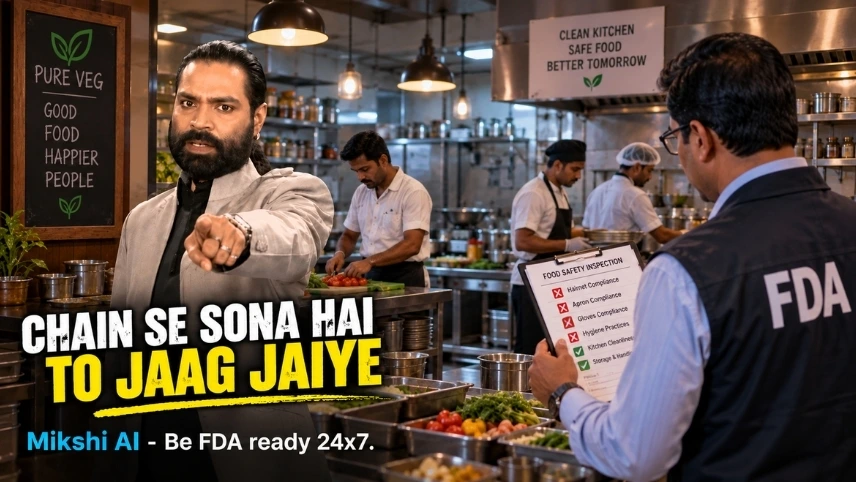
The financial stakes of failing an unannounced visit are steeper than most owners plan for. Under the Food Safety and Standards Act, authorities can suspend a food license immediately on discovering a serious violation, without prior notice, and the law does not require a full investigation first. The absence of warning is not an enforcement gap. It is the design.
FSSAI alone conducted more than 3 lakh inspections nationwide last year, this shows the intent of the authorities with regards to food safety. A suspension rarely stops at the closure itself. It costs the month's cash flow, spoils years of reputation triggers a mandatory re-inspection window, and for chains, often drags scrutiny onto outlets that never did anything wrong.
None of this happens because a kitchen does not know the rules. It happens because nobody had a continuous way to know what the kitchen looked like when no one was watching.
Are you confident your kitchen would pass an inspection that happened today, with no warning and no time to prepare?
No, then get that confidence
Book a Demo for your business with Mikshi AIWhat Changes When Someone Is Always Watching
This is where the conversation changes. Not one feature, but a set of specific, deployable use cases already running on the cctv cameras a restaurant has installed. If the distinction between passive recording and real-time intelligence is new territory, it is worth understanding before going further, since it is the entire premise behind everything below. Restaurant food safety compliance stops being a scramble and becomes a by-product of the system quietly doing its job every shift.
What Keeps Your Restaurant's License Safe ?
Hair Restraints and Hand Gloves Compliance Detection
Gloves, hairnets, aprons, and other required barrier protection wear are detected continuously across kitchen zones, not sampled during a scheduled walk-through. The moment a required barrier protection wear goes missing on the fry station or prep counter, the system flags it, whether a manager happens to be looking or not. This works the same way it does across factory floors already using AI for PPE compliance, just pointed at a kitchen instead of a shop floor. Over weeks, this builds the exact daily compliance record that separates a kitchen that is actually ready from one that only looks ready on inspection morning.
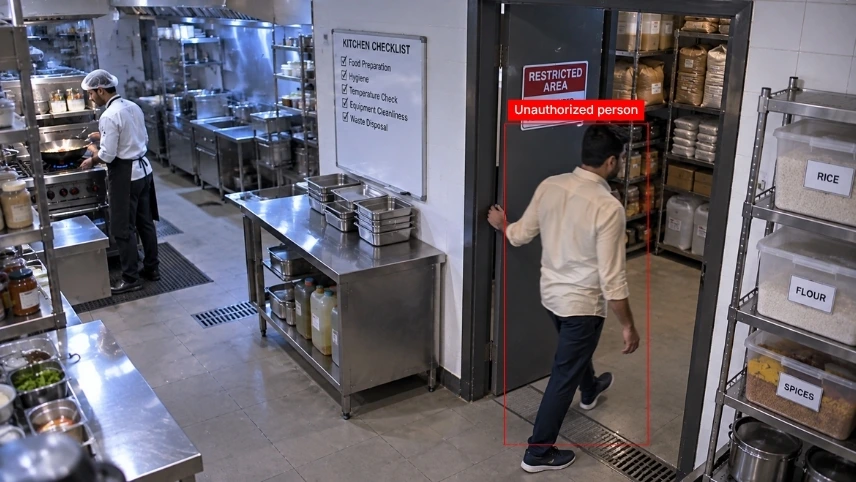
Cold storage, raw material handling areas like a butcher's corner, vegetables cutting corner, and storage rooms are some of the first places an inspector checks and some of the least supervised spaces in a typical kitchen. The system confirms who entered these areas and for how long, flagging access by anyone not authorized to be there. For chains handling high-value or sensitive stock, this closes a gap that a padlock alone cannot.
Staff Presence at Hygiene Stations
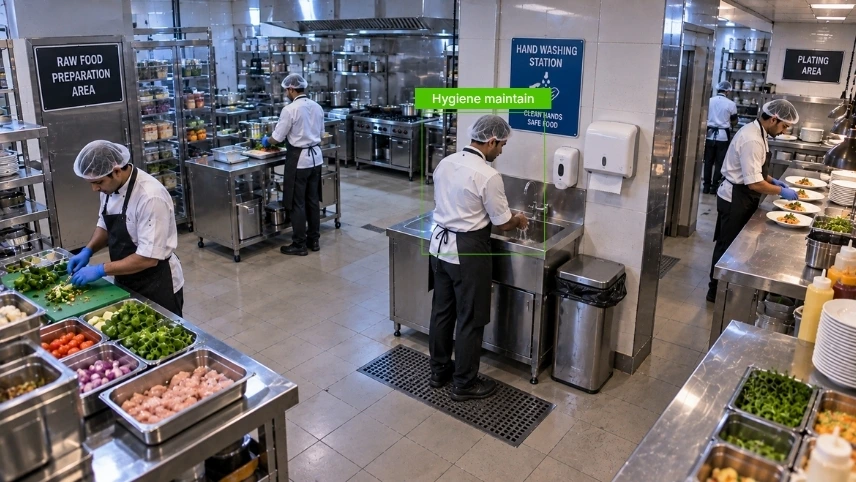
Hand washing between raw handling and plating is one of the most cited violations in food safety inspections, and one of the hardest to enforce through policy alone. Presence monitoring tracks whether staff actually used mandatory hygiene stations during defined handling windows without requiring anyone to self-report or fill in a log after the fact.
Camera Tampering Detection
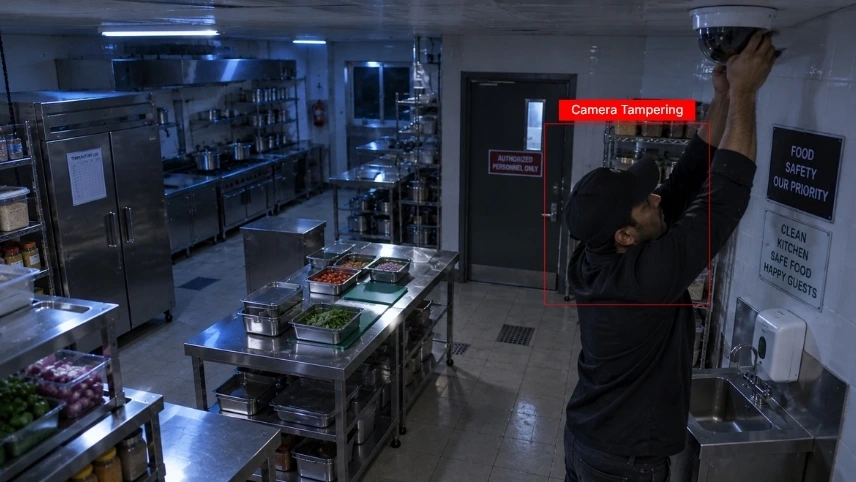
A compliance record is only as trustworthy as the camera feed behind it. The system flags if a camera is covered, blurred, repositioned, or otherwise compromised, which matters directly if a compliance question is ever raised later and the footage itself needs to hold up.
What Pays for Itself
Queue and Dwell Time Analytics
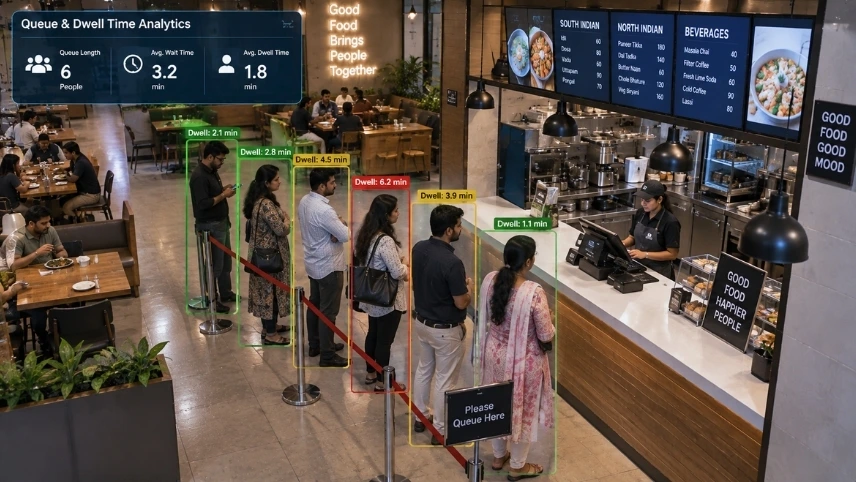
Long waits at the host stand, billing counter, or buffet line quietly cost restaurants covers every week, usually without anyone measuring exactly where the bottleneck sits. Dwell time analytics pinpoint precisely which stage of the guest journey is slowing table turnover, turning a vague sense of "we felt busy" into a specific, fixable number.
Footfall and Crowd Counting
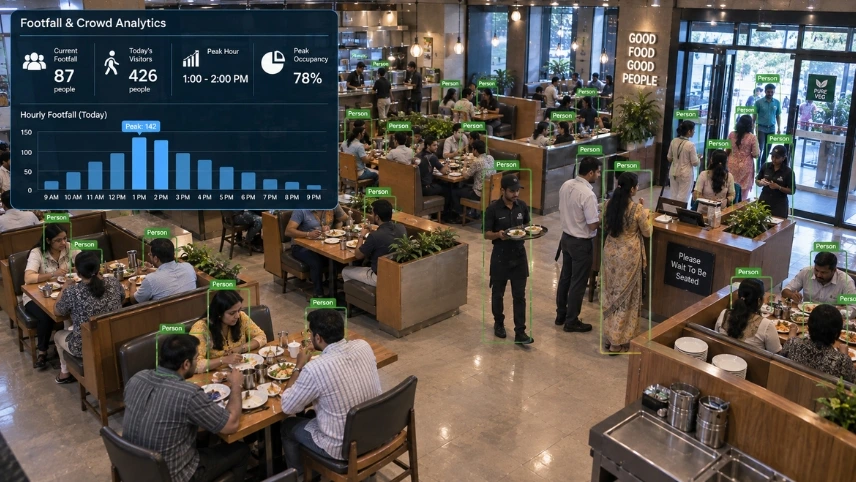
Most restaurants staff the floor and kitchen against a fixed roster built on guesswork rather than actual demand. Footfall counting shows true peak hours by day and by hour across every outlet, so staffing decisions follow real traffic instead of habit.
Occupancy Management for Banquets and Private Dining
Fire safety and licensing limits on banquet halls and private dining rooms are easy to lose track of during a busy event. Occupancy management keeps headcount within the configured legal limit automatically, protecting both guests and the license without a staff member manually counting heads at the door.
Staff Attendance Monitoring
Manual roll-call and buddy-punching are common, quiet sources of labor cost leakage, especially across multi-outlet chains where no single manager can be everywhere at once. Attendance monitoring tracks staff presence automatically across every location, tightening labor cost without adding a single extra supervisor.
Theft and Asset Misuse Detection
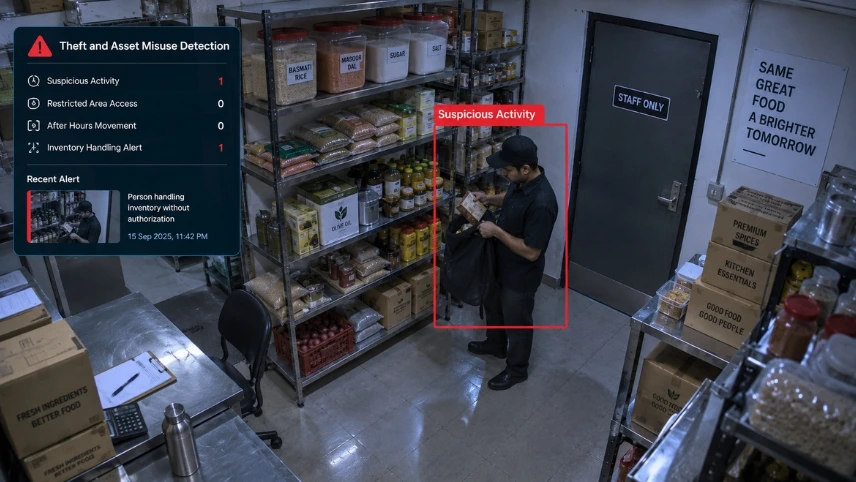
Shrinkage in inventory, cash handling areas, or stock rooms is usually invisible until it shows up in a reconciliation report weeks or months later. Mikshi AI flags suspicious movement near these areas as it happens, giving owners a chance to act before the loss compounds.
None of the above requires a second camera system, a different vendor, or new hardware on the wall. It is the same feed, already installed, simply being asked more questions than whether someone followed the glove rule.
How Mikshi AI Closes the Gaps Named Above
Go back to Sanjay, standing in his kitchen at five in the morning with no idea what an inspector would find if they walked in that minute. That fear exists because his compliance record, until that morning, lived only in memory and habit. AI video analytics for restaurants changes what that record is made of, on both the compliance side and the revenue side.
Mikshi AI turns a restaurant's existing CCTV setup into a continuous intelligence layer, without requiring new cameras or a rebuilt kitchen workflow. It protects the license. It also gives the owner a running picture of where revenue is leaking and where it is waiting to be captured. For a broader look at how this category of technology works across industries, our complete guide to AI video analytics covers the fundamentals this post builds on.
- Detects PPE and uniform non-compliance in real time, monitors restricted zones, tracks staff presence at hygiene stations, and flags camera tampering so the compliance record stays trustworthy
- Surfaces queue, dwell time, footfall, occupancy, attendance, and theft data that owners can act on the same week, not just during an audit
- Works on the cameras already installed, with on-premise, cloud, or hybrid deployment depending on what the site's infrastructure supports
A kitchen that has been consistent every single day for a year does not need to panic when a food safety officer walks in unannounced. It already knows exactly what that officer is about to see, and it already knows exactly where its next table, its next shift, and its next rupee of margin is coming from.
Every shift without continuous monitoring is a shift where your compliance record and your revenue picture, depend entirely on what someone happened to notice, or forgot to.
Book a demo for your restaurant with Mikshi AIIn this article
- Your Restaurant Doesn't Need to Panic Before FDA Inspections
- The Cost of Getting Caught Unready
- What Changes When Someone Is Always Watching
- Restricted Zone and Unauthorized Access Monitoring
- Staff Presence at Hygiene Stations
- Camera Tampering Detection
- Queue and Dwell Time Analytics
- Footfall and Crowd Counting
- Occupancy Management for Banquets and Private Dining
- Staff Attendance Monitoring
- Theft and Asset Misuse Detection
- How Mikshi AI Closes the Gaps Named Above


